San Francisco Bay Area
From the Golden Gate to Maverick's, there's something for every surfer along this chilly stretch of coast. There's giant slabs, Lindmar's easy peelers, Ocean Beach's fickle but occasional perfect beachbreak, the quirky, picturesque left at Fort Point and a bunch in between. It may not be Surf City, but it's arguably one of the best cities in the world -- with damn fine, if often maddeningly fickle, surf.
The Waves

Fort Point
On the best days, the wave starts around the point directly under the bridge and wraps nearly 90 degrees into the cove on the inside. Fort Point is an experience: safe and dangerous, exposed and protected, easy and hard. All of these things at the same time. Fort Point is safe because when the big, bad ocean outside the bay is closed-out, blown-out or otherwise unsurfable, Fort Point can be four to six-feet, hot and glassy. During the winter, Fort Point is usually offshore and rarely blows out, even in the strongest NW winds. Fort Point is dangerous for a few reasons. When the ocean is pouring in and the tide is pouring out, there's a lot of water going every which way under the bridge. Outgoing tides rip through here like a river. On the strongest tides in the winter, the current flows out as fast as seven knots, too strong to paddle against. Another danger is that the break is lined with rocks, and there is a big rock in the middle of the break, marking the inside lineup. A wipeout on a big day here could be harmful. Finally, it can be tricky getting in and out through the rocks that line the break. Fort Point can be a pretty good wave. With the right angle on the swell and the right tide and the right wind, it's a decent left point: sometimes hollow, sometimes fun, sometimes blown and ragged and gnarly and challenging. This wave is the definition of fickle: tide sensitive, wind sensitive. Not the shallowest wave in California or the longest-walled or the fastest, but definitely in the top five for most unusual.

Ocean Beach
Ocean Beach is the most emotional stretch of beach in all of California, and perhaps the world, because it's located dead center in the middle of California, and it's open to every burble and bellow from the north and the south. The winds are dynamic, but the real factor is the tide. All that water moving in and out of the Golden Gate sweeps up and down Ocean Beach with enough force to dislocate swell and shift sandbars from hour to hour. Ocean Beach has many, many moods, from the manic ecstasy of clear, blue offshore fall days to the gloom and doom of stormy winter, windy spring and gray summer. There is no stretch of ocean in California that changes as much from hour to hour, day to day and season to season as Ocean Beach.When Ocean Beach is on, you will see three miles of shifting, meaty, dark-green offshore peaks, from head-high to triple-overhead, cannonading the surf zone from south, west and north. A perfect day at Ocean Beach can be a mind-boggling sight, a mile after mile of perfect surf, with scattered humans doing their best to paddle through the impact zone, make it out the back and catch one of the buggers.On a lot of days at Ocean Beach, just getting out can be a major accomplishment. Depending on swell and tide and sandbar, on many days there is a 200-yard "zone of death" in between the beach and the lineup. It can be as hard to get off the beach and out to sea for a surfer as it was for a marine to get from sea to shore on the beaches of Normandy. It takes knowledge, skill, strength and courage, but the deciding factor on a lot of days is still dumb luck.Make it outside, and there are rewards, but your troubles aren't necessarily over. A good day at Ocean Beach is as good as any beachbreak in the world, but the good peaks here have a maddening quality of always being 50 yards away from where you're sitting. Even good surfers who surf the place all the time will get skunked, catching maybe one or two waves an hour, while paddling back and forth, trying to hunt down the big, shifting beasts.Ocean Beach is bordered by Kelly's Cove on the north end and Sloat Street on the south end. In between are three miles of beachbreaks, which become emptier and lonelier from north to south. There is parking from Kelly's Cove down to VFW's in front of Golden Gate Park. At Lincoln Avenue, the parking lot ends, the dunes begin and the streets become alphabetical, beginning at Irving and running all the way to Wawona. You have to park along La Playa or Great Highway the Lesser to walk across Great Highway the Greater to get to the beach. LINEUP TIPS: Etiquette | Surf Safety Basics

Lindamar
Linda Mar has its epic days, but for the most part, the surf ranges from poor to so-so, and the water is crowded with beginners and intermediate surfers. Linda Mar has a reputation for being gray and gloomy, but even in the thick of the region's summer fog season, there's often an inexplicable donut of sunshine beating down on the place. Linda Mar is at the end of a big valley that funnels south and southwest winds into offshores, and the surf can be cranking there during the winter, when the rest of the coast is blown out. The same conditions can exist in the summer, when that valley will turn the onshore fog winds into offshores. Linda Mar can be sunny and nice when Ocean Beach is like Moscow in winter.From north to south, the first spot at Linda Mar is called Round House. Next is Wander Inn, named for a bar that thrived in the '60s. South of Wander Inn, there is a parking lot and showers. This area is called State Park or the Pump House. South of that is The Creek, where a small, possibly toxic creek comes out to sea. At the south end of Linda Mar, The Boat Docks are lefts that break along the point in front of Dick Keating's timeless house. LOCAL RESOURCES: Pedro Point Surf Club | San Mateo County Surfrider
Maverick's
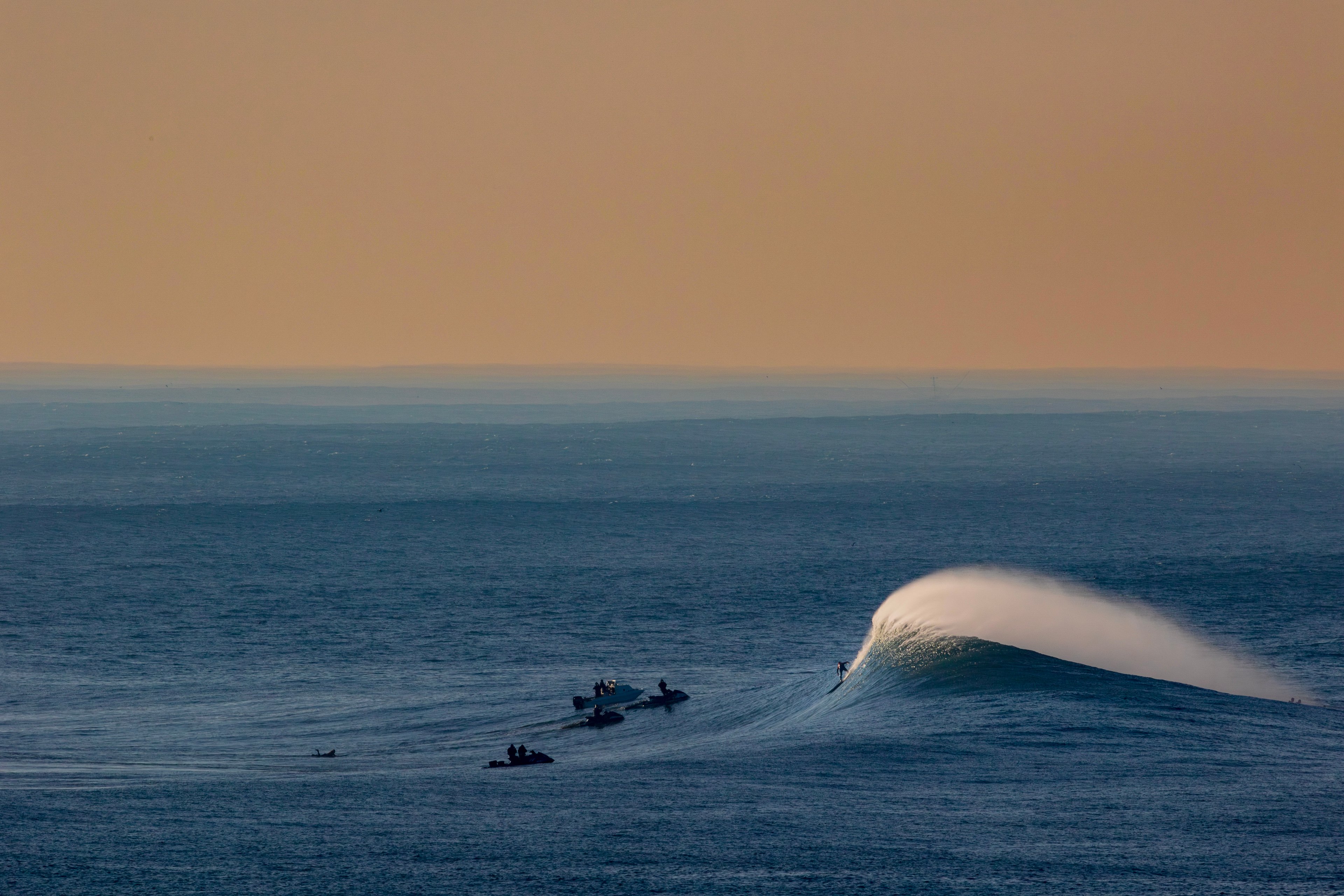
One of the seven natural wonders of the world, Maverick's is that rarest of things: not just a perfect wave and not just a giant wave but a perfect, giant wave. The peak lies a little less than a half-mile off of Pillar Point and is marked by a clump of Stonehenge-like boulders lining the inside (two of these boulders have even been christened: Mushroom Rock on the south end and Sail Rock on the north). Massive swells looming out of the deep approach a shelf - made up of black, ungodly reef and boulders 20 feet beneath the surface - at breakneck speeds. From there, Maverick's becomes a 20-foot version of Stockton Avenue: a perfect, jacking AAA-frame breaking both ways, the right going long and the left a short-lived explosion of hell and spitfire. The hot spots on the Maverick's playing field are as follows: 1. Outer Bowl: On the biggest of days (20 feet at 20 seconds and beyond on the Half Moon Bay buoy), there's a takeoff spot about 100 yards out beyond Maverick's proper. Few waves have been caught here, but all of them have been memorable; 2. The Corner: This is the peak on the extreme north end of the break that, if surfers time it right and choose the right one, allows them to get into the wave and down the face. Since it's the deepest takeoff point for the rights, it's often regarded as the triple-diamond takeoff zone; 3. Lates Bowl: This is an overflow section on the south end that occasionally serves up the rogue monster. When a big set shifts wide of the Corner, it usually breaks on Lates Bowl; 4. The Cauldron: Just inside the Corner, there's a wicked set of boils to be avoided at all costs. This is the focal point for the majority of Maverick's wrath and is the spot where most two-wave hold-downs happen. Strange phenomena -- whirlpools, undertows that suck people into the abyss, etc. -- have been known to take place at the Cauldron. LOCAL RESOURCES: Maverick's Rescue Team

"We do get perfect days, but a lot of the time there’s something you’re dealing with that can be semi-frustrating."
When to Score & Seasonal Surf Data
Know exactly when to score — powered by our expert historical forecast data.
Decades of spot-specific swell info — combined with forecaster insights — show your best chance to score, found only on Surfline.
Time to score

Forecaster reports
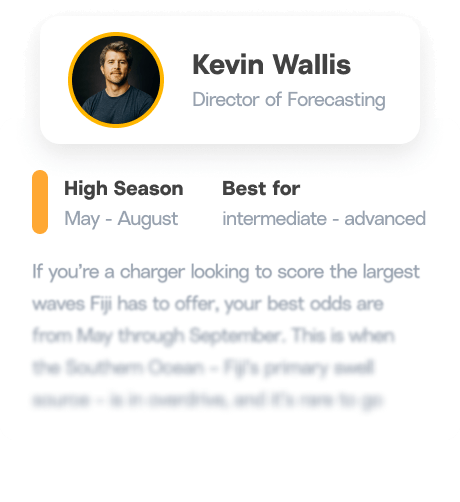
Seasonal Surf Data
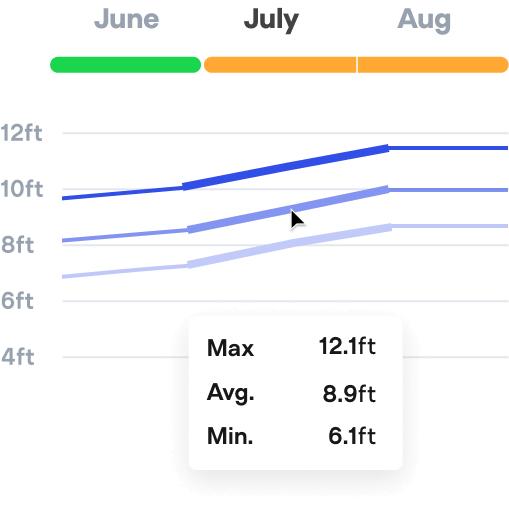

SF Bay Area According to...
Matt
Lopez
Longtime local/bar owner on a very complex -- and occasionally rewarding -- surf zone
What makes San Francisco Bay Area a special destination for surfers?
When I grew up, the consensus was that you’ve gotta get out of here to get “real waves.” But that’s obviously changed over the years. You’ve got the semi-big waves on bigger days at Ocean Beach – not huge, but solid. It’s pretty and picturesque, right on the edge of the city, which is cool: you can experience a great city and still score good surf. Wave-wise, it can be challenging. Currents, bump on the face — it’s not always perfect. We do get perfect days, but a lot of the time there’s something you’re dealing with that can be semi-frustrating.
What kind of waves can visiting surfers expect?
There’s a lot of diversity. From Half Moon Bay to Bolinas, you can almost surf every day, and surf different kinds of waves. Longboard waves, shortboard waves, all of it. Maverick’s is one of the best waves in the world. Ocean Beach is crazy consistent. Then you’ve got Fort Point right under the Golden Gate Bridge. That’s special. And Pacifica can be better for beginners and longboarders. The south end of Linda Mar is more protected, and it’s offshore on a south wind. Another cool thing about this whole zone: you can still surf by yourself. If you go to a random peak at Ocean Beach and you’re not trying to surf the “best” spot, you can get fun waves alone.
What’s the vibe?
Generally mellow. People are mostly friendly. But sometimes you get someone doing something dumb — unnecessary and dangerous — and they don’t realize it’s a big deal. Experienced surfers get frustrated because accidents in the ocean can be way more serious. There’s no “time out” out there.
What should surfers bring?
Depends. If you’re coming for a quick trip, bring a shortboard and a stepup. If you’re here for the season and you want to surf everything, you need a full quiver, from a groveler up to a 10’0”. There are weeks where you’ll go from small beachbreak peaks to big Ocean Beach to Maverick’s. In November, for example, you could ride everything from a 5’9” to a 10’0”. Most people wear 4/3mm wetsuits, plus booties and a hood if it’s cold and windy. The water isn’t as cold as some places, but it’s cold enough. I personally just wear a 4/3mm without booties or a hood. A 5/3mm can be overkill — you might get too hot because you’re paddling so much. If you live here, you might want a thinner suit for September/October because you’re surfing a lot and it’s a bit warmer. But November through spring can be cold. Even June can be cold. July and August start to warm up, and by September you might get warm weather mixed with warmer water, which is when you can wear a short-arm full or a 3/2mm.
When is the best time to score?
Probably November or January. You want classic offshore, bigger swells. January is when I’ve had my best sessions. November’s great for variety — you can get solid swells in the double overhead-plus range. December can be hit-or-miss. September and October are nice because it’s not foggy, but the waves aren’t always that good. February through April can deteriorate — lots of wind — and you’ll end up trying to hide in the Bay. But late winter can be great for Maverick’s — February and March can be crazy.
What else is there to do when you’re not surfing?
All kinds of stuff. Coffee shops. Hang out. Walk around Judah Street in your Birkenstocks. Also, the little towns around here are great. Pacifica and Half Moon Bay are cool. Mill Valley and other small towns are easy to access from San Francisco. You can get out of the city quickly. Marin has hiking and biking and Tahoe’s right there too. The Bay Area is close to a lot of different things within a few hours. Also, the city itself has everything: restaurants, concerts — Outside Lands (in October) is probably the coolest. But honestly, I don’t really want to do anything else — I just wanna surf all day.
What’s your favorite local cuisine?
That’s hard. In the Sunset: Hook Fish, Java Beach, Outer Lands. All the spots on Judah are cool. For drinks, my bars: the White Cap and Pitt’s. My favorite restaurant in the Sunset is probably Gold Mirror — old-school Italian on 18th and Taraval. It’s been there forever and they redid it. It’s fun. And there are tons of small spots — especially Chinese food places that don’t look like much, but the food is really good. You’ve just got to explore.
Where can people learn to surf?
Wherever the conditions are mellow and there aren’t a lot of surfers. There are good surf schools in Pacifica. Big Dog Surf Camp in Marin is good for kids. Santa Cruz has good schools for adults. Ocean Beach isn’t really a good place to learn. For me, it’s more about the day and the lineup. It’s like driving — you don’t want to start on the Autobahn your first day.
What are some things people should be aware of when it comes to local culture and customs?
Be respectful, follow etiquette, and come in slow. Don’t show up aggressive. It’s funny. You’ll see kids trying to act too cool, saying dumb stuff, while guys like Kolohe and Ian Crane are out there being respectful, mellow, and letting people go. Take the example from the best surfers — they’re often the nicest.
Any other local tips?
Don’t be afraid to drive and check. A lot of people never move — they just surf out front. But if you want to score, you drive up and down the beach, check different bars, and find what’s best.
Travel Essentials
Culture and Customs
Surfing here dates back to the '50s, when Lindamar was a hotspot for longboarders at the time. Dick Keating was the
Local Scene
Complicated. Each break has its own set of regulars who may or may not have surfed there for the last 20 years. It's gotten much mellower over the years, as many of the locals grew up, had kids and have created roots in tghe community.
What to bring
Depending on your skill level and desire, you could ride anything from a big-wave gun at Mav's down to a 10’ log for longboarding Lindamar. Since there’s a kind of wave for anyone, it’s up to you. Rubber-wise, a 4/3mm w/ boots will get you through summer, while a hooded 5/4/3 with boots (gloves if you need) are what you’ll need for winter.
How to get there
Fly into San Francisco (SFO) or Oakland (OAK), depending what's cheapest. You'll need to rent a car.
Downtime
This is one of the best cities in the world. Food, culture, all of it. You could spend a month here just eating great food without even seeing the beach. And within three hours of downtown SF, you've got the wineries of Napa and Sonoma, the snow and mountain activities of Tahoe, hiking and biking in nearby mountains
Quick Tips
Travel Time
JFK: 5 hours
Heathrow: 14 hours
Sydney: 14 hours
Connectivity
Everywhere. (No shortage of AI to boot!)
Currency
USD.
Avg. cost of...
Coffee: $6.00
Lunch: $20.00
Beer: $8.00
Hotel room: $200
Visa Requirements
Yes. Depends where you're coming from. Check with your local consulate.
Drinking water quality
Fine.
Hazards
Cold water, summertime fog, getting caught inside, sharks, parking tickets.
Cash, card, crypto
Credit cards are widely accepted, and access to ATMs is readily available.
Our favorite surf trips right now.


Have feedback on this zone? Let us know [email protected]
Questions about booking with Surfline Travel? Check out our FAQs