The Maldives
As far as tropical paradises go, you can’t do much better than the Maldives. This equatorial island nation is home to some of the most picture-perfect seascapes on Earth, and several world-class reefbreaks. The waves aren’t quite as heavy as, say, the Mentawais, but whatever these islands might lack in the power department they make up for with dizzying perfection, particularly during the peak season (May-September). Every year, a number of tour agencies bring in hundreds of surf visitors from all over the world. That said, it’s still possible to score uncrowded, even empty, surf at one of the main breaks. And just one session of silky six-foot tubes will make any 30-hour flight worthwhile.
The Waves

Pasta Point
Perhaps the most famous wave in the Maldives, this is where Tony Hussein-Hinde set up Atoll Adventures in the early '90s. Its name comes from the fact that the island used to be an Italian resort -- and after surfing the perfect lefts all day your arms will most certainly be noodled. Pasta Point is indeed probably the best left out here, as it picks up the most swell, is the least affected by wind, and offers a 100-yard-long tubing wall for your pulling-in enjoyment. The fast takeoff section leads straight into the so-called "Macaroni Bowl" tube section and then mellows for a couple top turns before the inside shallow racetrack, called Lockjaws.

Sultans
Sultans is one of the best waves in the Maldives, handling any size swell from the S and providing long, user-friendly walls that run through to a hollow inside section. One of the more approachable reef-points in the Indian Ocean, Sultans tends to attract surfers of all skill levels, from pros to those with more gumption than experience. The wave pumps throughout the season, handling the SW monsoon winds that trash most rights in the area.

Honky's
The takeoff zone at Honky's is actually part of the same reef as Sultans, just 100 yards south, and swells bend in towards the island pretty much from takeoff all the way through. It actually grows in size at it wraps on the inside section."Fred's Ledge" is often two feet bigger than the takeoff. By the time you kick out, the wave has wrapped almost 90 degrees. The currents running next to this left are some of the gnarliest in the area, so be sure to line up well with some point of land.

Jailbreaks
This is perhaps the Maldives' broadest wave field, with a bunch of different takeoff spots scattered along the flat reef, some linking up into 100-yard-plus rides, others into shorter tube sections. As it gets bigger, the sections kinda disappear and it becomes one super long, super fast right point, with three or four barrels per wave possible.Jailbreaks used to be "owned" by Atoll Adventures (ie: no one could surf there if they weren't staying at Tari Village), but the Maldivian Surfing Association helped open it up for everyone in the late '90s.


Lohi's
Lohifushi or Lohi's is high-performance lefthander, where swells pinwheel in around the island and wrap into the little bay with about three sections. The takeoff is into a long, sweeping wall which starts to bend at you a bit and tube as it comes around the corner; and the inside section is thin-lipped and fast and ends in a wide, shallow reef field close to the island. So close, in fact, that at high tide swells wash in over the pathway, and mini-jetties have been built to prevent erosion.

The combination of consistent, playful surf and great weather makes for an extremely comfortable environment. The Maldives is a special destination for your average surfer to score really perfect mid-size surf.

When to Score & Seasonal Surf Data
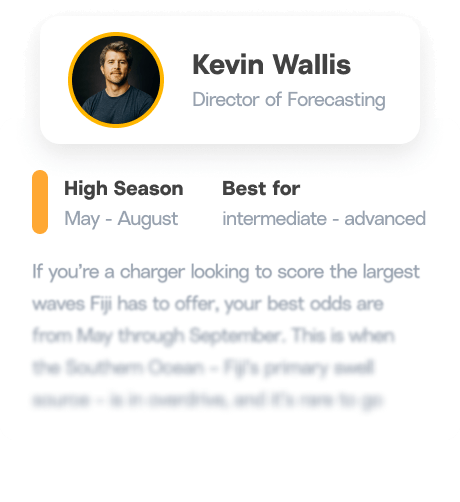
Know exactly when to score — powered by our expert historical forecast data.
Decades of spot-specific swell info — combined with forecaster insights — show your best chance to score, found only on Surfline.
Time to score

Forecaster reports
Seasonal Surf Data

The Maldives According To...
Richard
Kotch
One of the Maldives most seasoned lensmen shares the ins and outs of chasing waves through the atoll nation.
What makes the Maldives a special destination for surfers?
I think it’s the combination of consistent, playful surf and great weather in an extremely comfortable environment. We met so many surfers over the years at Lohis, and the majority didn’t want double overhead barrels, and all wanted a nice standard of accommodation, good food and cold beers, and if they were traveling with a non-surfing partner, they wanted to be sure that the non-surfers were going to enjoy their holiday too. So, I think that the Maldives is a special destination for your average surfer to score really perfect mid-size surf.
What kind of waves can visiting surfers expect?
The reefs are so gentle, it’s not like the waves are coming out of deep water and just heaving onto a slab like in Tahiti or Hawaii. The channels are really deep and the angle of the reef makes for really perfectly peeling waves. A teenage shredder can enjoy surfing with his 70-year-old grandfather.
What’s the vibe?
At the resorts the vibe in the water is generally super friendly. Remember that we are talking about high end surf tourism..surfers are paying for a luxury surf experience that includes surf guides who are there to help you get waves.
What should surfers bring?
Lots of zink, the Maldivian sun is intense. We swear by this stuff called Surf Mud as it is the best we have found and it’s completely natural. Definitely pack a mask and snorkel. Most resorts provide them, but I’ve never been a fan of sharing them.
The bugs aren’t really an issue and if they are you can always buy bug spray on the islands, but it’s really hard to get good, natural sunscreen that isn’t full of chemicals that are bad for the reef and your skin. I’d bring a GoPro and some spare batteries, not to surf with it in your mouth when it’s three-foot, but for all the classic moments that happen around the island and in the ocean. And you can trade off filming your friends and the quality is pretty epic these days. I’d bring a few books on a Kindle or some audio books. You need to have an excuse to rest and avoid burning out. I also recommend a good multi-vitamin, some Vitamins C and some rehydration salts. It’s easy to over do it and dehydration isn’t good.
Regarding boards, I went through a few different board phases at Lohis. From short fat fishes and quads when I didn’t ride a board over 5’6” all season, to standard high-performance shortboards when my average board was a 5’9” round pin that I rode pretty much every session.
What I always advised guests is to bring at least three boards: your favorite everyday board that you ride most days at home, along with a step-up incase it’s bigger (more likely in July/Aug/Sept) or the current is running and you want extra paddle power, and a step-down in case it’s 2-3ft every day (quite possible in Feb/March/April and /Nov/Dec/Jan) If you are bringing four boards I’d bring a backup of my favorite, everyday board. Something I noticed when pro surfers came to Lohis was the way that they enjoyed parking up on the deck with a bunch of boards and riding four or five different boards throughout the day. It’s so easy to pop out for a quick session, then come in, have a snack and a drink, then go back out on a different board or the same board with different fins. They said it was the best place to really dial in boards to see what worked best. If you’re a high intermediate/advanced level surfer looking through an extensive quiver deciding what to pack, you might find that lower volume boards, than you usually ride, feel great in the Maldives. Boards just seem to feel more buoyant over there and the waves are so nice that a super responsive low volume board feels great.
When is the best time to score?
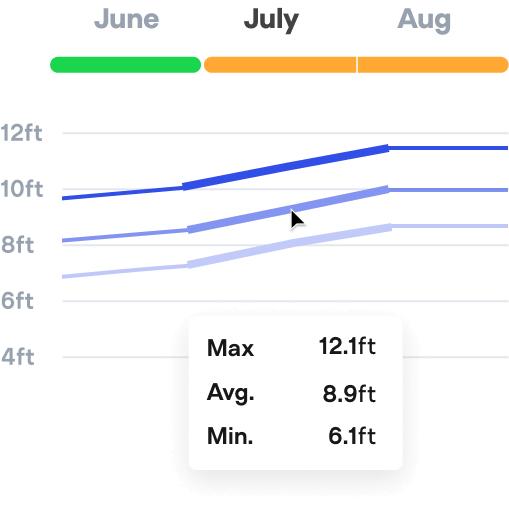
July/August is the most consistent, but if you’re going to the North Male atoll you really can book anytime from March to November and be sure that you will surf every day. February is typically small and weak, March/April is a lovely time to be at Lohis, with consistent perfect little swells and beautiful conditions, then by June the season really gets going. By late September/October things are slowing down, and by November it is back to being pretty small and soft.
What else is there to do when you’re not surfing?
To me, everything revolves around the ocean. Snorkeling the lineups is always fun, going for a SUP or kayak paddle, fishing excursions. All the resorts have a gym, tennis courts, different bars, a nice spa, romantic diners, excursions to local islands, etc.
What’s your favorite local cuisine?
I love the local breakfasts: tropical fruits, good coffee, mashoni (tuna with shaved coconut, red onion, chili and dandelion leaf) with roshi. I actually like to eat fairly simply so the vast selection of food can be a bit overwhelming, but guests always rave about the food.
Where can people learn to surf? Any surf schools you’d recommend?
I’m not 100% comfortable about the learn to surf thing, especially over reef. Yes, there are surf schools, but they have a burden of responsibility to ensure that their guests don’t do a lesson and then think that they should paddle out to the A-grade spots on a good day.
The guys at Hudhuranfushi have a learn-to-surf program that is held on the inside in the lagoon where there’s some reforms. On the the local islands you can find guys who are great at getting beginners standing up in a really fun environment. Niyama and Ayada both have great learn-to-surf schools with super professional, attentive instructors.
What are some things people should be aware of when it comes to local culture and customs?
The resort islands are set-up to be a completely self-contained, safe, judgement-free environment for guests to feel at ease and enjoy themselves. The local islands are 100% Muslim, so there’s an expectation that visitors will dress respectfully and not take alcohol ashore. The older generation of Maldivians have seen a huge shift in their lifetime, so please be patient and non-judgmental if you feel that you’re getting vibed on a local island, often it’s just shy curiosity.
Any other local tips?
When I was guiding in the Maldives, I would find myself repeating the same advice on a daily basis: avoid following the crowd too deep. If there’s a crew of surfers pushing deeper up the point, don’t get sucked into paddling deeper yourself, instead turn and paddle the other way, often the best waves break wider and the surfer sitting slightly further out and down the point, will score the wave of the day. The end section of most of the waves is the hollowest. All the waves I ever surfed in the Maldives have multiple take-off zones, so spread out. Another tip, if approaching the lineup by boat, ask to be dropped off at the end of the wave and paddle up the lineup. This way you get a read of what’s happening. Often the worse operators in the area will just drop their guests off at the top of the lineup, instantly creating a bad vibe among waiting surfers, and essentially throwing their guests in the deepend without the opportunity to ease their way into the session.
Travel Essentials

Culture & customs
Since the Maldivian economy primarily revolves around tourism, expect to be treated quite well while visiting. The capital city (and atoll) of Malé is insanely dense and crowded, but there are 26 atolls to choose from to find some breathing room. You’ll find the local surfers riding all the latest surfboard models and adhering to the hottest trends; and while there’s not as much localism here as in other parts of the world, don’t expect to just paddle out and take over. Like anywhere, the Maldivian surfers harbor a certain level of pride and proprietorship for their waves and don’t back down to aggressive outsiders.
Local scene
Just because the Maldives are in the middle of the Indian Ocean doesn’t mean the waves are empty. The truth is plenty of visiting surfers populate the Maldives Northern Atoll’s main eight breaks, with a United Nations-like range of ability levels — everyone from the token Americans, Aussie and Kiwi rippers to German, Italian and Swiss beginners (it’s a relatively cheap flight from Europe). Plus, the local Maldivian surfing population is growing by the minute.
What to bring
Shortboards, funboards, and fishes are the most reliable boards for the Maldives’ marquee waves, although you could probably get away with a longboard on a lot of days. Aside from boards, proper sun protection is crucial; the Maldives are right on the equator. And if you plan to surf your brains out all day (which you absolutely should), you’ll need high-quality sunscreen, warm-water layers, and creams and ointments for burns. You may wanna even consider surfing hats and surfing sunglasses. The sun is that intense.
Also: Our amazing partners over at FCS have curated a collection of fine products for your next surf trip. Check it here.
How to get there
Prepare for a journey, 30 hours of travel if you’re coming from California. It’s a bit easier for surfers coming from Europe, Australia and the U.S. East Coast, but still a hike. Once you land in Malé, you’ll probably take a boat — or in some cases, a seaplane — to your island accommodation or charter. And once you’re there, there will likely be a perfect wave and a cold umbrella drink waiting for you. Nonetheless, exploring other atolls by boat or plane is encouraged.
Downtime
The Maldives aren’t just for hardcore surfers; this is a tropical paradise in the middle of the ocean, which means plenty of fun for the entire family: snorkeling tours, swimming with sharks, diving at shipwrecks, parasailing… Or just chill in a hammock and take in the otherworldly beauty. It’s paradise, you can’t go wrong.
Quick Tips
Travel Time
LAX: 19 hrs
JFK: 18.5 hrs
Heathrow: 10.5 hrs
SYD: 28 hrs
Connectivity
Expect WiFi at your hotel/resort; everywhere else, you’re on your own.
Currency
Maldivian Rufiyaa. At the time of writing, $1 USD = 15.45 MVR
Avg. cost of...
Cup of coffee: $2.50
Lunch: $10.00
Beer: $4.00
Hotel room: $500.00
Visa Requirements
No visa needed for 30 days; $50 to extend your stay to 90 days.
Drinking water quality
Varies from island to island. Best to stick with bottled.
Hazards
Jetlag from the long trip, reef rash, sunburns, multiple boats showing up at the same spot. An empty wallet after your trip.
Cash, card, crypto
Always good to have cash, and to pick some up prior to arrival or in the capital, for tipping and small exchanges. However, you’ll likely have already paid for everything when booking your accommodations. Yeah, it’s that kind of trip.
Explore Other Zones


Have feedback on this zone? Let us know [email protected]
Questions about booking with Surfline Travel? Check out our FAQs