Los Cabos
A beautiful desert landscape coupled with comfy accommodations and all manner of modern amenities, Cabo’s three main areas -- the East Cape, Costa Azul, and the west-facing Pacific Coast -- have become a kind of surfing Disneyland. The area is littered with a variety of ridiculously fun and dependable waves. From silky righthand points to slabbing rock reefbreaks, this zone has something for everyone, especially those attracted to warm water and world-class nightlife.
The Waves
Zippers
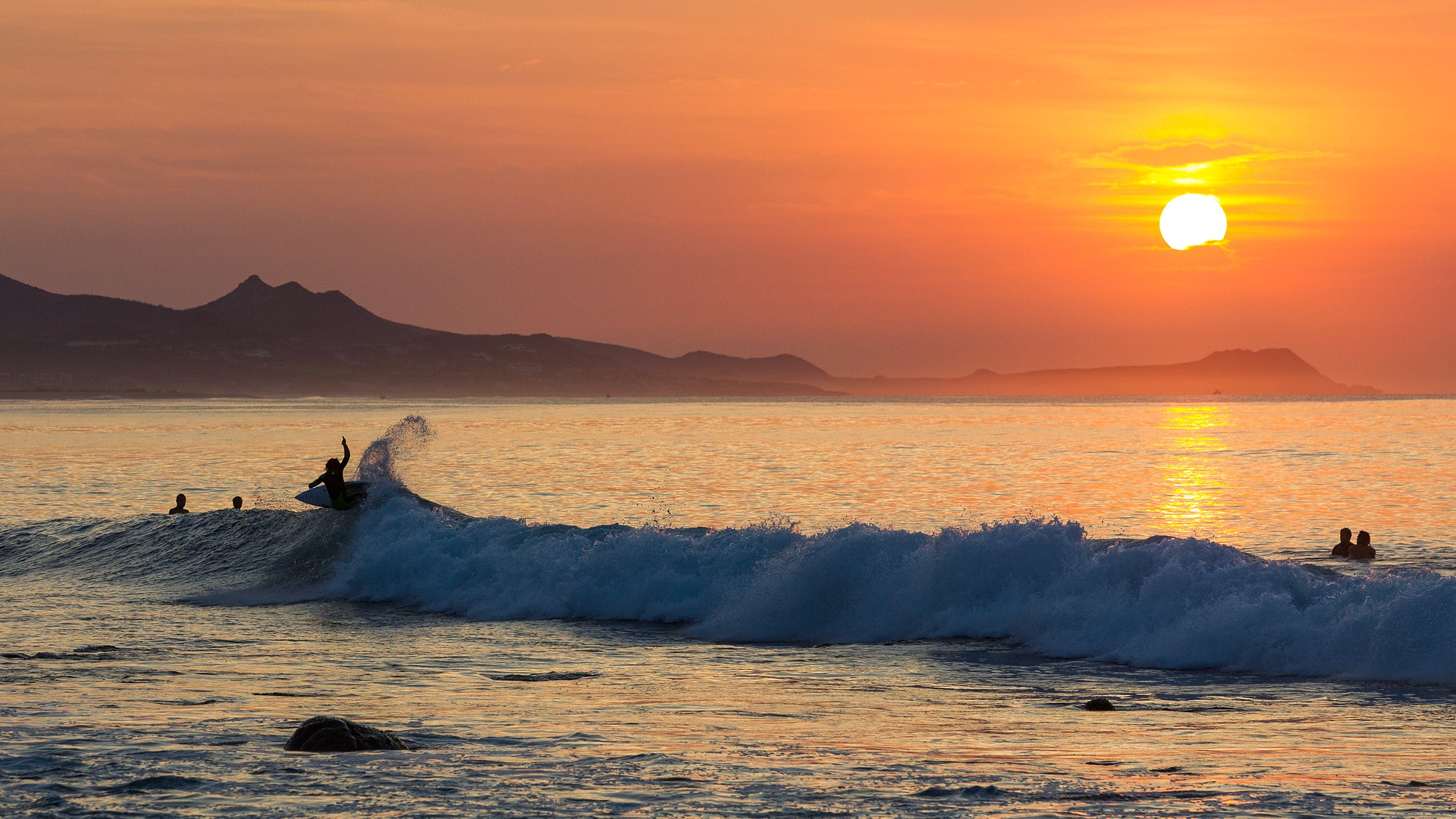
One of the best waves in the Cabo San Lucas region, Zippers is sufficient enough in quality that just a few good ones can make your session. A river mouth-created right, Zippers peaks up gently outside of some exposed rocks, allowing for a smooth, easy takeoff. It then quickly whizzes almost laterally along the cobblestone reef, picking up speed as it heads towards its inside section, where hackable lips and air sections are commonplace. The wave maintains its size all the way down the line; it's one of those waves where you can incrementally improve your turns. This all sounds dreamy except for the fact that Zippers is Cabo's most crowded wave.

Shipwreck
Shipwreck picks up about the same amount of swell as Costa Azul near San Jose del Cabo, which makes it fairly consistent, especially in the summer. And while the star wave is a zippy right point/reef at the west end of the bay, which can connect all the way through to the beach in a series of different sections, there's also a little reef in the middle of the bay that can produce short-but-sweet lefts. Both waves are steeper and faster than Nine Palms.

The Rock
The entire lineup from beginning to end is strewn with rocks, big ones. At low tide, especially, you will be dodging boils, burps and weird, sharp sections that love eating fiberglass. The wave itself is extremely fun, though not as good as neighboring Zippers. It is a right reefbreak that can be infected with a few difficult sections to negotiate, and it is also often a little mushy in certain parts. That said, on a strong S swell and a mid-high tide, you won't find anyone complaining out there (imagine a poor man's version of Upper Trestles and you're almost there). The proper takeoff area is pretty small -- right next to the rock -- so crowds become a factor pretty quick, making catching a decent wave infinitely more difficult.

The Estuary
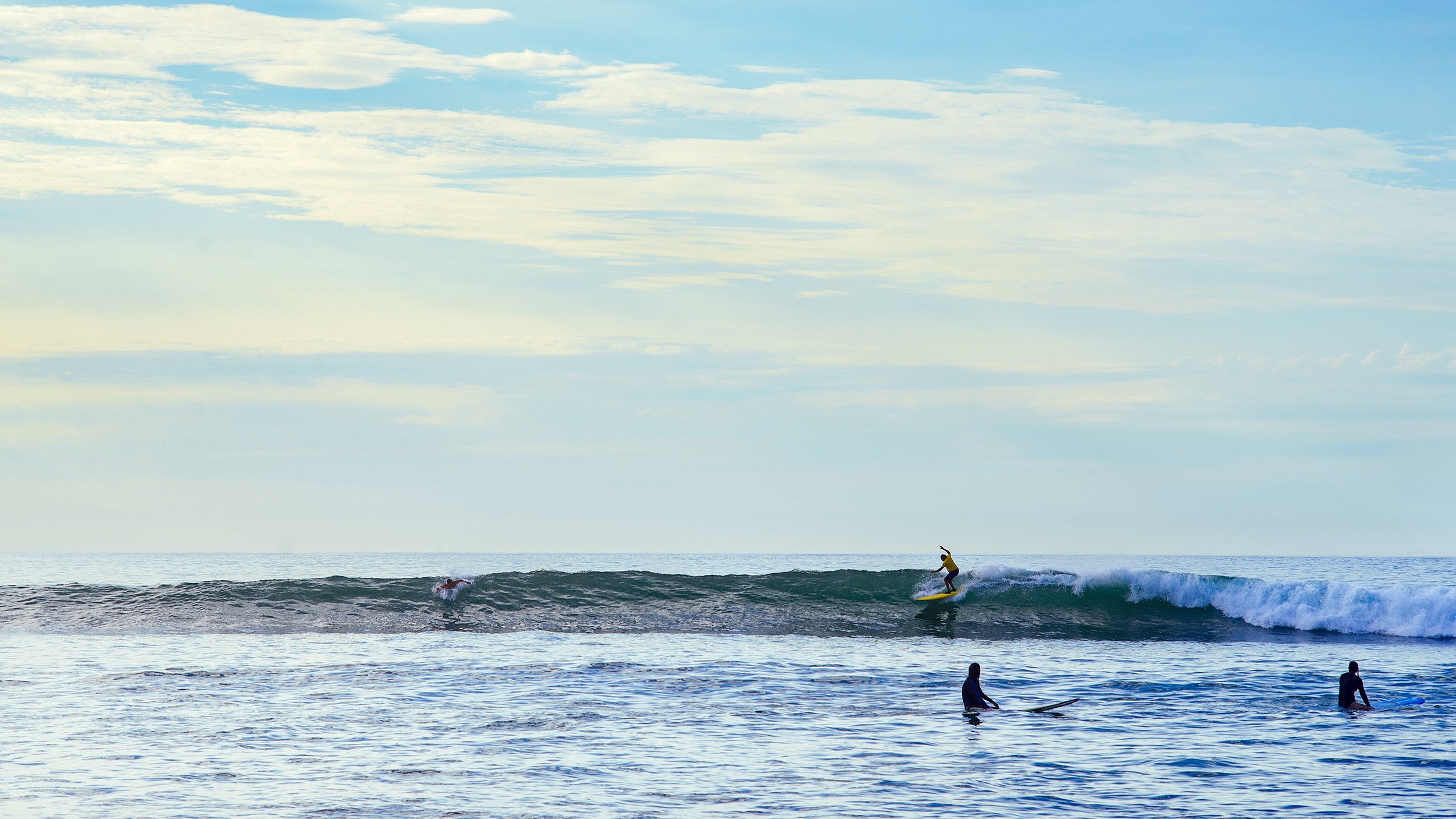
The Estuary - or La Bocana (rivermouth) - is San Jose Del Cabo's city break. Because of this, it is quite polluted. Not to worry though, The Estuary is one of the Cabo area's most fickle waves. When it is at its best - once every few years after a big storm washes the coastal berm away - it is a perfect A-frame that tubes in both directions. This rare perfection, of course, is a double-edged sword - the heavy rains bring sewage, animal cadavers, trees, and pretty much anything else that floats, directly out to the line-up. It's not exactly an ideal surfing situation when you're sharing waves with swaths of feces and the occasional dead dog.If the health hazard isn't enough, the local contingent have The Estuary wired and are on it every time it is good. When the surf is just average, however, there are a few scattered peaks around and you can often catch a few empty ones for yourself. Also, the mediocre waves may be less polluted.If you're still interested, The Estuary is located on the east side of San Jose Del Cabo's beachline in Estero San Jose, a peaceful park that is supposed to be a protected wildlife sanctuary.

Nine Palms
This Baja Sur pointbreak has been a high-ranking hotspot on surfers' Cabo itineraries for decades - and it's definitely one of the most popular waves on the East Cape, despite the fact that it's not world-class by any means. Under head-high, Nine Palms is a bit mushy and slow. However, when an overhead summer S swell drains in, Nine Palms ignites into a reeling wall with plenty of perfectly crackable sections. And if your timing is especially impeccable, you might even get a sneaky barrel.
Monuments
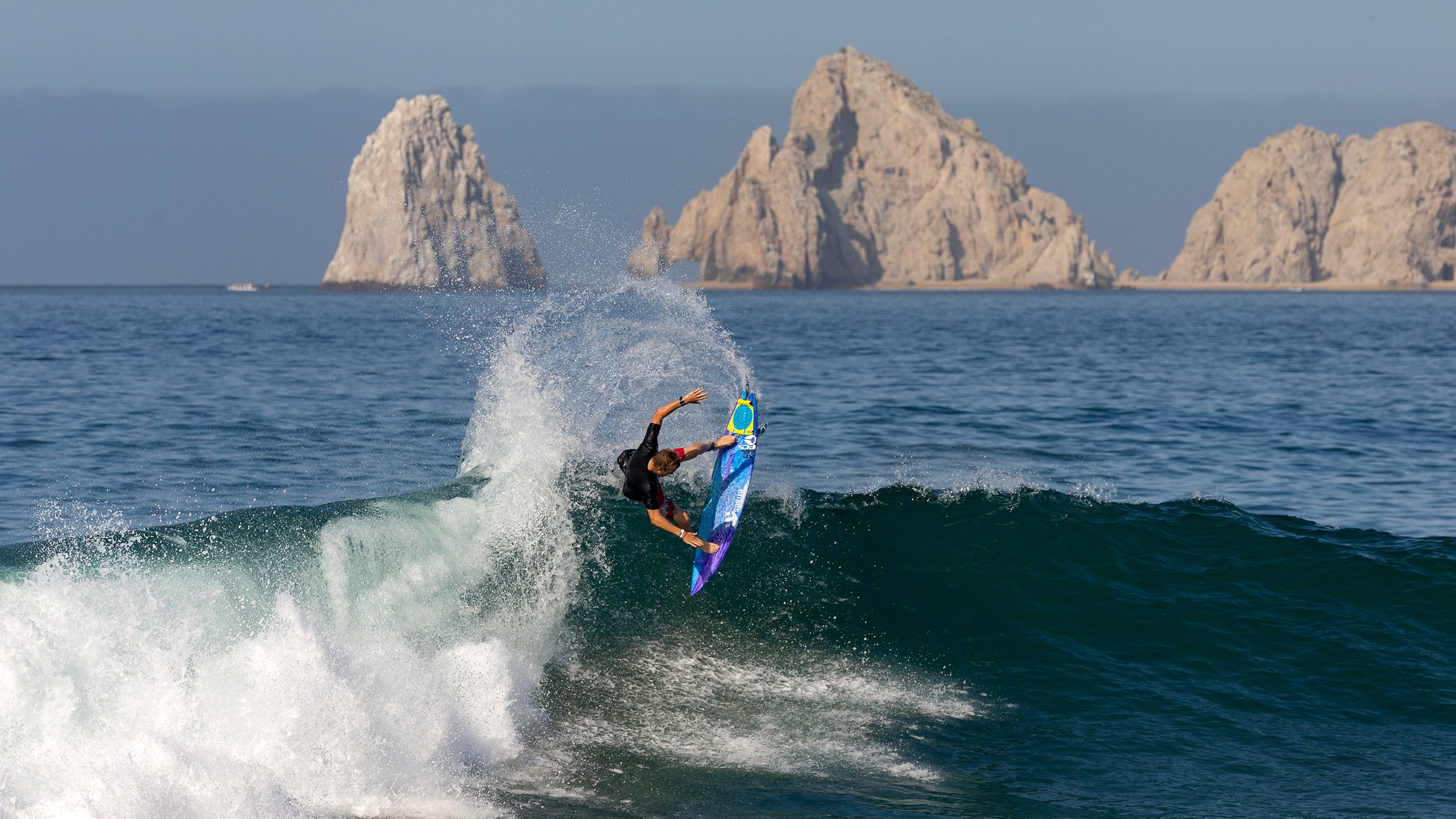
A super-fun left pointbreak, Monuments is a must-do spot for any surfer exploring the southern tip of Baja. There is a deepwater canyon just offshore -- the same one that made Cabo San Lucas a natural, deepwater harbor, in fact -- which funnels long-interval W and SW swells into steep, spinning lefts that reel along the headland and into a small, rocky bay. On a 17-second swell, for example, Monuments can be double-overhead while Costa Azul just down the road is barely pushing head-high. The Monuments takeoff zone is pretty tight, unfortunately. And if the crowd doesn't bite, then the robust urchin colony on the shallow rocks on the inside will. Afternoon W winds often blow the spot out, as well.

Cerritos
Perhaps not quite as good as neighboring Pedrito, Cerritos is nevertheless a great option when it comes to variety and beach appeal. There are a couple different waves to choose from, depending on the swell. During a big wintertime west or northwest there is a right that breaks off the headland at the north end of the beach. It's not an amazingly hollow or world-class right point break, but it can get really fun and rippable, especially when it connects with the sandbar section farther inside.South swells make for good A-frames in the lee of the headland; the lefts dumping into the channel are perhaps a bit better. Combo swells and wind swells tend to light up the whole beach in a series of fun peaks, spreading the crowd out quite nicely.

San Pedrito
The last stop on the peninsula's west coast before plowing headlong into the glitz of Cabo San Lucas is the dusty village of Todos Santos. Not to be confused with the little island with the big wave named Killers up north, Southern Baja's Todos Santos holds in its quaint jurisdiction three incredibly fun waves to choose from: Los Cerritos, La Pastora and San Pedrito.It's important to note that up this way -- about 45 minutes north of Cabo on the west coast -- the water can sometimes be five to eight degrees (Fahrenheit) colder, the winds stronger, and the days foggier. While all of these adverse conditions can make things slightly less comfortable than the sunnier, glassier points south, they also mean that the surf will always be bigger -- oftentimes a whole lot bigger. This also means that you're unlikely to score empty waves in the area's most prime spots, especially San Pedrito.San Pedrito's main attraction is its righthander, which can become highly rippable and point-like between October and March, when NW swells are most prevalent. However, in the summer months, San Pedrito becomes a little peakier, making for a more breathable, stretched-out lineup. Most of the year, the water temperature is warm enough for boardshorts, though January through June can see some chilly temps due to upwelling.

It’s like traveling anywhere in the world for surf: you’ll get out of it what you put into it. If you come with good vibes, respect the locals, smile, and are friendly, you’re going to have a great trip.

When to Score & Seasonal Surf Data
Know exactly when to score — powered by our expert historical forecast data.
Decades of spot-specific swell info — combined with forecaster insights — show your best chance to score, found only on Surfline.
Time to score

Forecaster reports
Seasonal Surf Data

Cabo San Lucas according To...
Stosh
Lindsey
Cabo shredder breaks down the opportunities waiting near the tip of the Baja Peninsula.
What makes Cabo San Lucas a special destination for surfers?
The warm water, a lot of different surfbreaks, and waves that you can surf by yourself if you don’t mind doing some exploring — these are the things that make Cabo so special. There’s a lot of opportunities in either direction once you get outside of town.
What kind of waves can visiting surfers expect?
We mostly have right points in the area. There are some random little nooks and crannies and some beachbreaks, but it’s mostly right points. And they’re a bit slower, more playful. There aren’t a lot of barreling waves around here most of the time, but we have those really long points that are perfect for a fish. And a lot of random waves pop up during hurricane season. That’s my favorite time of year to surf, because a lot of weird spots wake up and you can actually get really good barrels. That’s kind of the only time you can get barreled down here — when there’s a hurricane swell.
What’s the vibe like?
The vibe’s been getting kind of crazy, to be honest. The spring break scene in Cabo San Lucas is bonkers, and over the last few years the growth has been unrelenting. Full exponential growth. We have traffic now, which is a new thing that we have to get used to, and we’re seeing a huge change in the town. During the pandemic, a lot of expat gringos moved down here, and real estate has been going off, but it’s also getting crowded with people that actually live here. There are a lot of big hotels that have been built in the last five years, and each one of them has to employ a full staff, so that’s a lot of people.
What should surfers bring?
Sunscreen is a must. The sun can be scorching here, especially in the summer, which is when most people come down to surf. You don’t need a wetsuit, but a wetsuit top or a good rashguard is nice to have to keep the sun off you. You can be pretty exposed at some of the spots further away from town. After a four or five-hour session, you can get so burned, and it doesn’t really cool down until the end of November. In terms of surfboards, bring a wider, more playful board, because a lot of the waves are soft. A fish or mid-length is ideal for this area.
When is the best time to score?
The best time of year around here is March-October, that’s pretty much the season. Springtime is really beautiful as far as the weather goes — it’s not too miserably hot yet and there are waves — and that’s my favorite time to surf. But in the summertime we do get the hurricane season, which runs July-October. That’s when you can really score some epic surf, but you also risk being hit or trapped by a hurricane. September is probably the hottest and most humid month, and the most dangerous. That’s when hurricanes actually hit us because of all the warm water. It’s like a magnet.
What else is there to do when you’re not surfing?
There’s so many things to do — most of it involves nature. We have some pretty amazing pools and hot springs up in the mountains. That’s one of my favorite things to do. You can hike to a pool or hot spring and feel like you’re in another country. It’s a whole different world that’s very diverse. And there’s nightlife in both Cabo San Lucas and San Jose Del Cabo, but San Jose Del Cabo is a lot mellower. Cabo San Lucas can get out of hand, especially during spring break. Thursday night is San Jose night, when they shut down the roads and everyone comes out. There’s an art walk and a good community vibe.
What’s your favorite local cuisine?
There’s so many good places to eat. Tacos are always the way to go down here in Mexico. I’d say 80 percent of the time you’re going to a taco place. But it’s changing and growing, so there are a lot more restaurants now. The sushi here is amazing. There’s so much good fishing here that you can get incredibly good, fresh fish at many spots.
Where can people learn to surf?
There are a lot of nice beaches that have playful surf that’s good for learning. As far as surf lessons go, a lot of my friends do them. There’s a shop next to where I live, Sanjos, and they do lessons there. Sometimes I’ll help them out a little, if they’re shorthanded.
Any other local tips?
It’s like traveling anywhere in the world for surf: you’ll get out of it what you put into it. If you come with good vibes, respect the locals, smile, and are friendly, you’re going to have a great trip.
Travel Essentials

Culture & customs
Cabo San Lucas is one big party. From Spring Breakers to bachelor and bachelorette parties to expats who never wanted to go home, the nightlife (and daytime drinking) scene is what draws most visitors to Cabo. So, take your time, get your surfing in…the cervezas and tequila will still be waiting there once you’re done. San Jose Del Cabo is totally different – it’s much more mellow, a colonial vibe, and cruise-y waves. Then, up the coast, you’ll find the neat little hideaway of Todos Santos. It’s an artist enclave with many expats, cool shops selling crafts, and a couple lesser-frequented surf spots.
Local scene
The three main towns of this region are quite different. San Jose Del Cabo is a fairly quaint little colonial town with a big public plaza downtown and plenty of nice restaurants, shopping outlets and low-key hotels. Cabo San Lucas, about 20 miles west, is a huge port town, with an infamous party scene and fast-blinking, neon signs urging visitors to drink more. Contrarily, Todos Santos, about an hour up the Pacific Coast, is more of an artist’s enclave complete with groovy galleries and plenty of expat conveniences.
What to bring
Your shortboard, fish, funshape, longboard, hand-plane…there’s something for every type of surfer here. Of course, don’t forget your sunscreen, warm-water wax, and other tropical surf trip essentials.
Also: Our amazing partners over at FCS have curated a collection of fine products for your next surf trip. Check it here.
How to get there
One could drive from the CA-Mexico border, but most folks fly right into Los Cabos International Airport, located just outside town. Car rental agencies are right in the terminal, though it’s often cheaper to organize before arriving. (BBB Rental is a popular and reliable choice.) If you plan on spending time on the East Cape, keep in mind that many agencies won’t insure regular cars for that road — it’s pockmarked and dusty — so you may need to get 4WD. Cell service can be spotty, so best to download offline maps.
Downtime
The main drag of Cabo San Lucas is a legendary hotspot for partying, so there’s that. But there’s other stuff to do, too. Drive an hour north to Todos Santos, or head in the other direction to the East Cape, which is much mellower than Cabo central and offers fishing and windsurfing. For the kids, Cabo has all the typical water activities including parasailing, jet-ski rentals, snorkeling, banana-boating, etc. And the iconic Lover’s Beach is busy, but worth a visit.
Quick Tips
Travel Time
LAX: 2.5 hrs
JFK: 5.5 hrs
Heathrow: 12 hrs
SYD: 22 hrs
Connectivity
In major hotspots, like at hotels and around Cabo San Lucas’ main drag, WiFi is pretty abundant. But, if you’re looking for full connectivity (and limited roaming charges), it’s best to talk to your cellular provider before going and establishing an international plan.
Currency
Mexican Peso. At the time of writing, $1 USD = 20.32 MXN
Avg. cost of...
Cup of coffee: $2.00
Lunch: $8.00
Beer: $3.00
Hotel room: $250.00
Visa Requirements
No need for a visa, unless you plan on staying for more than 180 days.
Drinking water quality
Bottled only. Seriously.
Hazards
Petty theft, getting ripped off, urchins, foodborne illnesses, partying too hard.
Cash, card, crypto
Most places in Cabo will take card, but having cash on you for a roadside taco or cerveza isn’t a bad idea. And, out of convenience, many vendors in Cabo will take either USD or MXN.
Explore other zones


Have feedback on this zone? Let us know [email protected]
Questions about booking with Surfline Travel? Check out our FAQs