Southern Points
Oaxaca hosts dozens of world-class righthand pointbreaks that are exhaustingly long, dizzyingly perfect, and suck in the same swells that light up Puerto Escondindo up north. The Southern Points zone has been well-worn for decades by hardcore Mex trippers, but the 2006 Rip Curl Search event at Barra de la Cruz unveiled its potential to the whole world. Since then the points have become increasingly popular among waveriders of all sorts. Some breaks are fast and hollow, but most are user-friendly, with plenty of locally run guide services catering to traveling surfers’ every need.
The Waves


Conejo
With its machine-like, impossibly long walls, Conejo is one of the most popular, dependable, and downright fun waves in all of Salina Cruz. Showing its best face on large, long-period, straight south swells – the same ones that light up Puerto Escondido a clicks north – this sandbottom righthand point can be as good as anywhere on earth for the average regular-footer. Ten turn rides are standard here, and when the sand is just right, you can often luck into a few dredging tubes on the inside section. Of course, perfection breeds crowds, but if you practice patience, pay respect, and wait your turn, just a few good waves here can make your trip.

Chivo
As sure as the sun setting in the west, any traveling surfer visiting Salina Cruz will make at least one stop at Chivo. The blue-collar cousin of the more famous and photographed points in the region, Chivo is nothing if not dependable. From two foot to ten foot, this sandbottom right point always seems to be working. So, if the more fickle waves in the area aren’t doing their thing, give Chivo a crack. With its race-y walls and occasionally great tube section, this spot can offer exceptional rides for those who pick the right wave.

Chipehua
Known locally by its nickname, "Elvis," Chipehua is exactly that: The King. As fickle as they come, Elvis doesn't show his face often. But when he does, get ready for a show. On its day, Chipehua can be one of the best waves anywhere, with long, perfectly-tapered walls running almost perpendicular to the beach. Fast and hollow off the takeoff, lucking into several barrel sections on one wave is not out of the question. And even if you miss the tube, you’ll still get five-plus cracks at the lip before the wave runs away. Of course, just like a real Elvis show, don’t expect a private showing. Perfect Chipehua is both rare and alluring so be prepared to sit alongside a solid crowd of talented surfers when it breaks.

Mojon
Not far from its more famous (and more crowded) big brother, Barra de la Cruz, Mojon is tucked away down a quiet little street in Huatulco, just north of Salina Cruz proper. Situated in front of an old Oaxacan hacienda, this short, punchy righthander can offer great turn sections, but really, it's all about one thing: barrels. Like the dozens of other points in the area, Mojon breaks off a rock outcropping that favors south and south-southwest swells. What makes it unique is the sand; in good seasons the bars form perfectly from the top of the point through the inside section, allowing for a clean, open barrel from start to finish. The swell size and period has to be just right though; too big and it closes out, too small and it doesn’t quite come to life. If you get it on a medium-sized, long-period south, though, this wave can significantly up your time in the tube. And even if the swells not quite right, or the tide is gurgling that infamous backwash, Mojon still offers rippable sections for turns and airs. Worth a check when Barra is overrun, or you just need a change of pace from the other waves in the area.

This is, without a doubt, one of surfing’s seven wonders of the world. Within a two-hour drive there are numerous points and coves that, on any given day, can have world-class surf. And the main thing is, it’s great for every level of surfer.

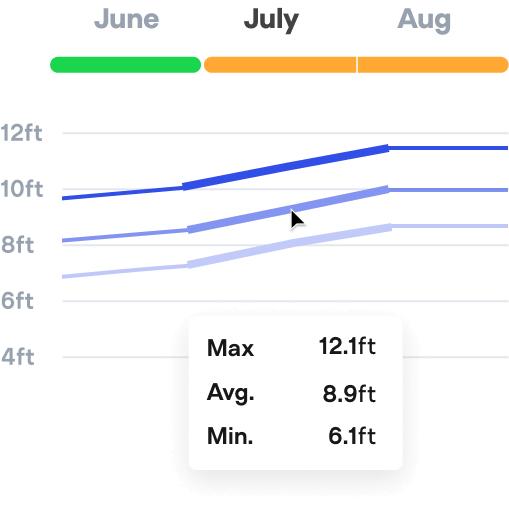
When to Score & Seasonal Surf Data
Know exactly when to score — powered by our expert historical forecast data.
Decades of spot-specific swell info — combined with forecaster insights — show your best chance to score, found only on Surfline.
Time to score

Forecaster reports

Seasonal Surf Data

Mexico's Magic Points According To...
David
Ramirez
An inside look at what makes Oaxaca a wonder of the surfing world.
What makes the points region of Oaxaca such a special destination for surfers?
This part of the world is without a doubt one of the rare wonders of the world in surfing. Within a two-hour drive there are numerous points and coves that on any given day have world-class surf. One of the main things is it is great for every level of surfer.
What kind of waves can visiting surfers expect?
Surfers should expect to surf mostly long point waves that are mostly user-friendly with the exception of a couple points that are heavier. There are a few jetty waves that can be a bit more challenging on the right day and are way shorter than the points. All the waves break over sand, and if you get a chance to go left in this region it is very rare as 95-percent of the waves are rights…thank god [laughs].
What’s the vibe?
It really depends on who is traveling through the area. It’s mostly traveling surfers, which means you have every type of culture in the water. I have seen it so mellow with everyone taking turns to people paddling by the pack like they are buoys. With all the different spots in the area you can move around the crowds. Without a doubt, a few of the waves are very beginner friendly. I always tell my friends with kids learning to surf if you come down and push them into a wave, they will mostly likely be surfing for almost a minute. Even for the best surfers the waves can be so long you can mess up five times and still have time to think about what you are doing wrong and start over.
What should surfers bring?
With the way forecasting is these days you can really choose your equipment to nail your trip. If it’s a normal trip in the area, I say bring a board for good surf, then a fish or some kind of average-wave board and then something completely strange. The reason for the last board is you end up surfing so many waves it’s easy to get bored riding the same thing over and over. Some of my most enjoyable trips have been the ones I bring something completely different, or if I am with some friends and they have boards that I never thought of riding and end up having a blast. This area is full-on, so I always say bring energy bars and other food that gives you energy through the day. Always bring any type of gear you have to keep the sun off you, the heat can be very intense. I have seen so many people get heat stroke from surfing all day and not drinking enough water. I always bring a big bottle with me and fill it up through the day. Drink way more water than you think you need.
When is the best time to score?
Can’t answer that [laughs]. Realistically, this area can fire anytime through the season, usually April through July the sand at the points is primetime. That being said, one of the best days I have seen was in October. One of the main differences is usually around mid-June the rainy season starts.
What else is there to do when you’re not surfing?
There isn’t a whole lot going on besides the surf. The fishing is very a good. One of the best things I have done, besides surfing, was go visit the ruins which are about 45 minutes away from Las Palmeras. I really recommend going to do that if you have an off-day down there. Make sure you go early as it gets very hot.
What’s your favorite local cuisine?
Thats a tough one. The food in Oaxaca is so incredible I can't really pick one thing that is my favorite. The local salsas in the area are incredible. If you get a chance try the tlayudas, or Mexican pizza.
Where can people learn to surf? Any surf schools you’d recommend?
There really isn’t any surf schools in the area. The guides are very helpful with tips, but it's not a full-on surf school.
What are some things people should be aware of when it comes to local culture and customs?
I just really think use common sense. You’re not in the States, try to respect the locals. Most of the surfers in the area do work for a surf camp, but remember, there are also the people that work at other places and just showing up to go surf at their local surf spot.
What’s the number one thing folks should keep in mind when traveling through the area?
You’re not in the States. Things can take more time and just relax.
Travel Essentials

Culture & customs
Although the cultural flavor and local hospitality is similar to what you’d find in nearby Puerto Escondido, the southern port town of Salina Cruz is less the domain of partying backpackers, or even tourists in general, and more for wave-focused surf campers. Apart from Barra, many of the other points are locked down by the local community, who quickly recognized the value of their waves and instituted unofficial rules requiring visiting surfers to stay with local providers. So it’s difficult, and ill-advised, to try and surf this place independently. Once you get over the fact that you must pay to play, you’ll find that the waves are more than worth it, the local guides are friendly and welcoming, and it’ll still be the quickest, cheapest, easiest score you’re likely to get in the Northern Hemisphere.
Local scene
Long gone are the days of scoring these fabled righthand points alone. Today, Salina Cruz is a well-known stop on the everyman’s world tour and surf camps are almost always booked to capacity. Combine that with a healthy population of local surfers and the fact that the different points work on different swells and wind conditions, and things can get pretty busy at whichever point happens to be on the pump. But if it’s good enough and consistent enough, it doesn’t even matter. There’s so many waves to go around and the treadmill is so relentless and the sun is so hot, everyone’s walking as much as they’re riding. Just be cool, wait your turn, pick your set, and you’ll likely get some of the longest, most perfect waves of your life.
What to bring
Oaxaca’s points are about as close as you can get to user-friendly tropical perfection this side of Indonesia. On all but the biggest days, your shortboard will suffice. But you can also get away with riding longboards, alternative shapes, finless boards… any surfcraft imaginable, really. But absolutely bring a fish or a twinnie for the smaller, high-tide sessions. And if you like to charge and are coming during a run of larger swells, bring a bag full of shortboards, step-ups and leashes, as the sandbars can get quite hollow and breakage is common. The water and air are straight-up hot, so bring your warmest-water wax, your strongest sun protection — long-sleeve surf shirts and hats included — and drink more water than you think you need.
Also: Our amazing partners over at FCS have curated a collection of fine products for your next surf trip. Check it here.
How to get there
Your best option is to fly into Huatulco, which fields daily flights from all over Mexico, as well as a number of international arrivals. Puerto Escondido International Airport is also an option, although that tags on two extra hours of driving to get to the points. Many people opt for a combination Puerto Escondido/Salina Cruz trip, which is convenient for those seeking variety. Fly into Puerto a couple of days before a big swell, enjoy hefty barrels every morning at Zicatela, then drive down to the points, check into a camp and shred your legs off for another week. It’s pretty much a sure thing.
Downtime
Unlike Puerto Escondido, which always has waves due to an offshore canyon that focuses the swell on Playa Zicatela, the southern points need proper sandbars, enough size, and a lack of gap winds to really fire. Which means there are often down days — and down seasons — between dream sessions. When the points do go flat or sideshore, consider fishing, snorkeling or simply relaxing in a hammock with a good book and a cold beverage. Your body will probably need the rest anyway. After days on the pointbreak treadmill in the hot Mexican sun, you will be totally worn out. Or, you can always escape to Huatulco or Puerto Escondido for nightlife and shopping.
Quick Tips
Travel Time
LAX: 8 hrs
JFK: 10-15 hrs
Heathrow: 12 hrs
SYD: 40 hrs +
Connectivity
There’s decent Wifi at all the surf camps; things get a little less reliable when you’re off hunting waves.
Currency
Mexican Peso. At the time of writing, $1 USD = 20.32 MXN
Avg. cost of...
Cup of coffee: $1.50
Lunch: $10.00
Beer: $2.00
Hotel room: $125.00
Visa Requirements
No need for a visa, unless you plan on staying for more than 180 days.
Drinking water quality
Bottled only.
Hazards
Traveling in Salina Cruz proper without a guide, getting ripped off, sunburns, noodle legs (from walking up the point), noodle arms (from paddling up the point), foodborne illnesses.
Cash, card, crypto
Make sure to have cash on you, since some of the points require an entrance fee. ATMs are scarce, especially near the points, so pick up some Pesos when you’re in town.
Explore Other Zones


Have feedback on this zone? Let us know [email protected]
Questions about booking with Surfline Travel? Check out our FAQs