Northern NSW
This sub-tropical coastline, stretching around 250 km (180 miles) from Yuraygir National Park south of Yamba all the way to the Gold Coast border, is a kind of rural surfing dream. It’s where surfers first fled Australian cities back in the late 1960s, founding new kinds of surfing lives in the idyllic coastal landscapes, and giving rise to what became known as Country Soul. If you’ve watched the 1972 surf movie “Morning Of The Earth”, you’ll have a sense of it. If not, wow, take some time and wander through this area. Like everywhere in the world, it’s a busier place than it was in the Country Soul days, but many traces of that magic still remain — and the waves are as good as ever.
The Waves

The Pass at Byron Bay
For surfers, the "Bay" part isn't what defines Byron, it's more the Cape, which does in fact stick further out into the Pacific than any other piece of Aussie mainland. Naturally enough, there's a considerable quantity of surf spots in the area.On the tip of the Cape there's Watego's and Little Watego's. Kind of a combination reef/sand pointbreak, it produces slow rights.From there the whole thing opens up into The Pass, Byron's serious point. A long, winding right, it's dependent on sand distribution but usually starts close to a rock outcrop and peels down toward Clark's Beach over a half mile away. Often the wave gets hollower as it runs down the line. Competition for set waves on good days isn't so much intense as almost impossible.Opposite the town center there lies the remains of a wrecked ship, which can create decent sandbars. Creatively known as Shipwrecks or the Wreck, this is a wedged-up wave, occasionally very hollow and a lot of fun. There are also a few little beachbreaks between the Wreck and the Pass.All these spots require an east to northeast swell to really fire. None of them pick up much from the predominant southeast swell angle unless it's really big. To cash in on smaller souths, you've gotta head south of the Cape to Tallow Beach, a lovely long clean sand stretch of occasionally superb quality beachbreaks. Protected from the northeast sea breeze, Tallows is the haunt of mobile surf schools, surfing families, and most of Byron's hot young crop.Several miles past the small town of Suffolk Park lies Broken Head, Byron's gorgeous semi-secret point. Best on an east swell and a south wind, Broken's unpredictable sandbar is at times a unique long right barrel. You may not be able to count on it, but as the saying goes: if you ever get it, you'll never forget it.Be aware of sharks at every location. Byron was once a meat processing and whaling town, and the genetic memory of all that blood still lingers in the regional aquatic food chain.


Lennox Head
Lennox Head is an east-facing, world class right hand point break. You can admire the wave from above on the large Lennox Point headland before you walk down to the slippery rock off. The 0.8 mile/1.2km long rock bottom point lights up in south-east swells, predominantly occurring during the winter months. It offers surfers quality long green walls with hollow sections depending on the sand formation on the rocky reef. The crowd is heavily geared towards the locals, so if you’re traveling to surf here make sure you mind your manners and bring your friendly face.

Cabarita
Cabarita is a long, sectiony right breaking at various points along the two headlands. It's highly dependent on sand placement; while it can be a bit of a burger, it can also come to resemble Burleigh Heads on its better days, with a long, fast, hollow section running right across the front of the smaller outcrop and peeling further down the bay. Off the bigger point, the wave tends to be superficially attractive, but inclined to mush out a bit unless it's big or the sand is right on target. Both these sections are sheltered from the classic fall/winter southerly wind, and nicely offshore in a southwesterly to westerly. On the other side of the headland is a classic 'back beach' -- a less-frequented beach behind a well-known pointbreak - a clean, curving beach that runs for a couple miles down to the next headland, Hastings Point. There's usually good beachbreak peaks scattered up and down the stretch, especially close in to this northern headland, where the waves are protected from the near-permanent summertime NE seabreeze.

Angourie
Angourie Point is a small east-south-east facing rocky outcrop attached to the coast by a thin sand finger. The wave is a rock-bottom right-hand point attached to the north side of the headland. Angourie is one of the crown jewels of the Australian east coast, a perfect wave to practice any turn you want to explore in your surfing. The long right hander comes to life when waves come from anywhere from the northeast to the southeast. It becomes steeper and more hollow in east swells, and more sloped on larger south swells. The crowd can get heavy on weekends, and the locals rule the roost, but if you’re a respectful traveling surfer you will get your fill. On small days the point fills with beginners and people riding alternative surf craft, making it a great spot for a summer family beach day.

The waves are normally pretty fun all year round, but the cyclones come during summer and that’s when things can get really interesting.

When to Score & Seasonal Surf Data
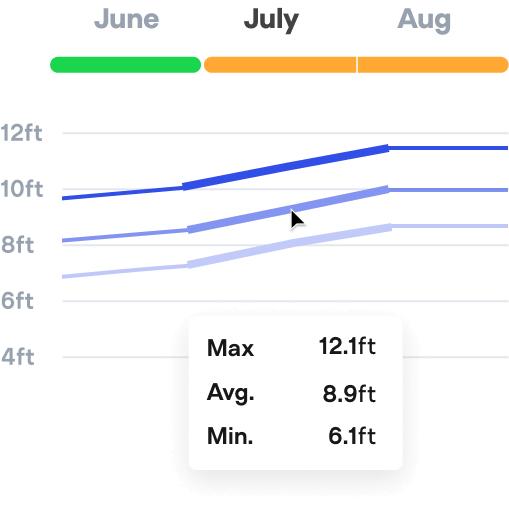
Know exactly when to score — powered by our expert historical forecast data.
Decades of spot-specific swell info — combined with forecaster insights — show your best chance to score, found only on Surfline.
Time to score

Forecaster reports
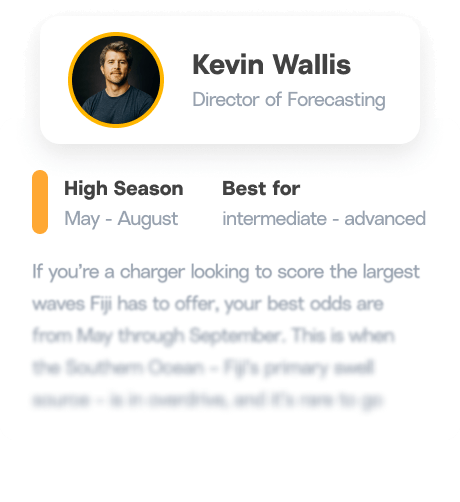
Seasonal Surf Data

New South Wales According To...
Micah
Margieson
Take a tour of the coast with the son of Margo.
What makes New South Wales, in particular the Tweed Coast area, such a special destination for surfers?
The Tweed Coast has so many beaches with great banks all along the coast. It’s not only the beaches that make these places so beautiful, but also the scenery that surrounds them partnered with the marine life, which is everywhere.
What kind of waves can visiting surfers expect?
From perfect beginner waves to challenging waves for experts, this stretch of coastline has many different banks that suit all abilities.
What’s the vibe?
The Tweed Coast is crowded, but also a beginner-friendly place to surf. You can find your own bank where it’s mellow and more enjoyable.
What should surfers bring?
Surfboard-wise, I suggest bringing a groveler or epoxy board for the smaller days, or even a twinnie. And then bring your normal high-performance shortboard. Maybe even something a little longer if a cyclone is brewing.
When is the best time to score?
The waves are normally pretty fun all year round, but the cyclones come during summer and that’s when things can get really interesting. Although, winter does have its days.
What else is there to do when you’re not surfing?
The Tweed Coast has so much to offer, with some of Australia’s best restaurants and the theme parks only an hour away. There is plenty to do when there are no waves. There are also heaps of surf shops to get you set up with your next quiver.
What’s your favorite local cuisine?
My favorite local cuisine would have to be The Burrow at Cabarita Beach. Good vibes, amazing food and great service – it delivers every time.
Where can people learn to surf?
I highly recommend Tweed Coast Surf School. The crew down there are amazing surfers and their knowledge is perfect for anyone of any age wanting to start their surfing journey.
What are some things people should be aware of when it comes to local culture and customs?
Most surf spots around the world are the same: if you’re visiting a break, show respect and you will gain respect. Although most places in the region are pretty mellow, be mindful of your belongings and treat the beaches as if they’re your own. As they say, leave only your footprints.
Any other local tips?
If the surf’s no good, it’s always six-foot and offshore at Caba Pub!
Travel Essentials

Culture & customs
Northern NSW is river country. The coast and hinterland is crossed by several really significant bodies of water, including the Clarence at Yamba and the Richmond at Ballina, just south of Byron Bay. Sands and waters from these rivers gives the area its defining surf zone markers — long white-sand beaches and points, most of which rely on the sand-flow to keep them in top shape. These qualities are reflected in the wide variety of surf cultures, from the fairly hard-core crew who ride the more testing waves at Lennox and Ballina to the busier yet more longboardy/Fish vibes of Byron’s Pass. Much is made of Byron’s hippie vibe and crazy house prices; scratch the surface and you’ll find a place with deep country roots and a rapidly evolving tourism/travel economy, both of which make it easy for a traveler to connect with the area and its people.
Local scene
A classic mix of old-school Country Soul surf experts, happy-go-lucky kids, surf families, and a big traveling population makes for a lot of human variety in and out of the water. As with most Australian surf zones, local and regional surfers are generally pretty open and easy to get along with, and you’ll find that typical mix of boardriders’ clubs and volunteer surf rescue clubs on many beaches, along with a lot of barely touched sand. A note of caution here: thanks to the river flows and Byron’s unique place as Australia’s most easterly point, northern NSW has a long track record of shark attacks and encounters, usually from local bull sharks and migrating whites. If you come across perfect waves with nobody out, there may be a good reason.
What to bring
Whatever board you want! You’ll find the waves super accommodating. As with most Australian surf zones, northern NSW has a thriving surfboard design community and produces very high quality product tuned to the region, so if you don’t feel like bringing one, you’ll very likely go home with one. The winter months will require some rubber, at the most a 3/2mm full suit, though you’ll be able to get away with a little less most of the year, and in the finest surf months of late summer and autumn, you’ll find little use for more than a vest or short john/jane. Pack something warm to wear briefly on chilly mornings, and as always in Australia, pack for sun protection.
Also: Our amazing partners over at FCS have curated a collection of fine products for your next surf trip. Check it here.
How to get there
Fly into Brisbane International Airport from every major hub in Europe and the Americas. It’s not a short flight, but worth every ounce of the considerable jetlag. From there, hire some wheels and drive the 130 kilometres (80 miles) south to Byron Bay.
Downtime
If you can tear yourself away from the endless wave hunts of the area, it’s well worth a drive inland from Byron to explore the cool smaller towns and farmlands of the region and sense that Country Soul vibe. Eco-resorts and several splendid restaurants will give you a chance at some of the good life. Incredible beach and rock fishing, and you’re 40 minutes’ drive from the southern Gold Coast with all its urban pleasures. But really, this part of Australia is all about cruising. Don’t rush through your time here, it’ll reward a slower pace.
Quick Tips
Travel Time
LAX: 15.5 hrs
JFK: 20.5 hrs
Heathrow: 21.5 hrs
Connectivity
WiFi available at coffee shops, hotels, businesses, etc. And expect decent cell service otherwise; you’re not in the middle of nowhere…unless, of course, you want to be.
Currency
Australian Dollar. At the time of writing, $1 USD = 1.41 AUD
Avg. cost of...
Cup of coffee: $2.50
Lunch: $12.00
Beer: $5.00
Hotel room: $150.00
Visa Requirements
Yes. A visa is required to visit Australia for 90 days or less. A fee may be applicable depending on what type of travel you intend to do (business or holiday) and how long you plan to stay.
Drinking water quality
Some of the cleanest in the world.
Hazards
Petty theft, getting ripped off, sunburns, crowds, localism (at some spots), leashless longboards careening through the lineup, overpriced green juices.
Cash, card, crypto
Credit cards are widely accepted, and access to ATMs is readily available.


Have feedback on this zone? Let us know [email protected]
Questions about booking with Surfline Travel? Check out our FAQs