Surf Coast
Facing into the turbulent waters of Bass Strait between the Australian mainland and Tasmania, the Surf Coast is unique, both geographically and in its place in Australian and global surfing legend. This 100-kilometre (60-mile) stretch of beaches and reefs centres around the famed Bells Beach, and that alone would make it worth a visit. But there’s so much more to the area, both in terms of surf and in sheer visual beauty. Once purely rural, the Surf Coast is being slowly incorporated into the far suburban fringe of the nearest big city, Melbourne. Yet despite this, it still remains amazingly country, and the waves are as fantastic as ever.
The Waves

Bells Beach
Big, broad, open lineup facing slightly east of south into Bass Strait, but open to the SW, Bells is a short coarse-grained sand beach flanked by old sedimentary rock headlands sloping away to the west and east. There’s several distinct breaks here: Centreside, well up the reef to the west; Rincon or Little Rincon, the tip of the Bells point itself; the Bells Bowl, pretty much the spot’s main break; and Winkipop, Bells’s cousin, just around a short headland to the east. In small swells these spots are all held well apart from each other, but in a big winter-style SW groundswell they feel a lot more connected. Generally best in a SSW swell head-high to triple overhead or bigger, with winds from the NW. LINEUP TIPS: Etiquette | Surf Safety Basics

Jan Juc
Jan Juc gets a lot of surf action - mainly due to the fact that it's the closest decent beachbreak in the vicinity of the quality reefs found in the Torquay area. Located in front of the Torquay golf club, Juc can serve up some quality surf when the right conditions come together. Thing is, when the conditions are right here, it's often firing at the nearby reefs. This means a lot of people use it as a backup spot when the swell is getting a touch small or the wind is getting into Bells and Winki. The peaks tend to shift around a bit at Juc, and it can get a touch crowded, but it can still serve up the goods, particularly when the reefs haven't been firing for a while and the locals need to get wet. It's also a useful testing ground for those wanting to practice their air-time in cross-onshore days. When surfing at Juc, keep your eye on Bird Rock, at the western end of the beach - it can provide some short, sucky barrels on mid to high tide. Small takeoff spot.


13th Beach
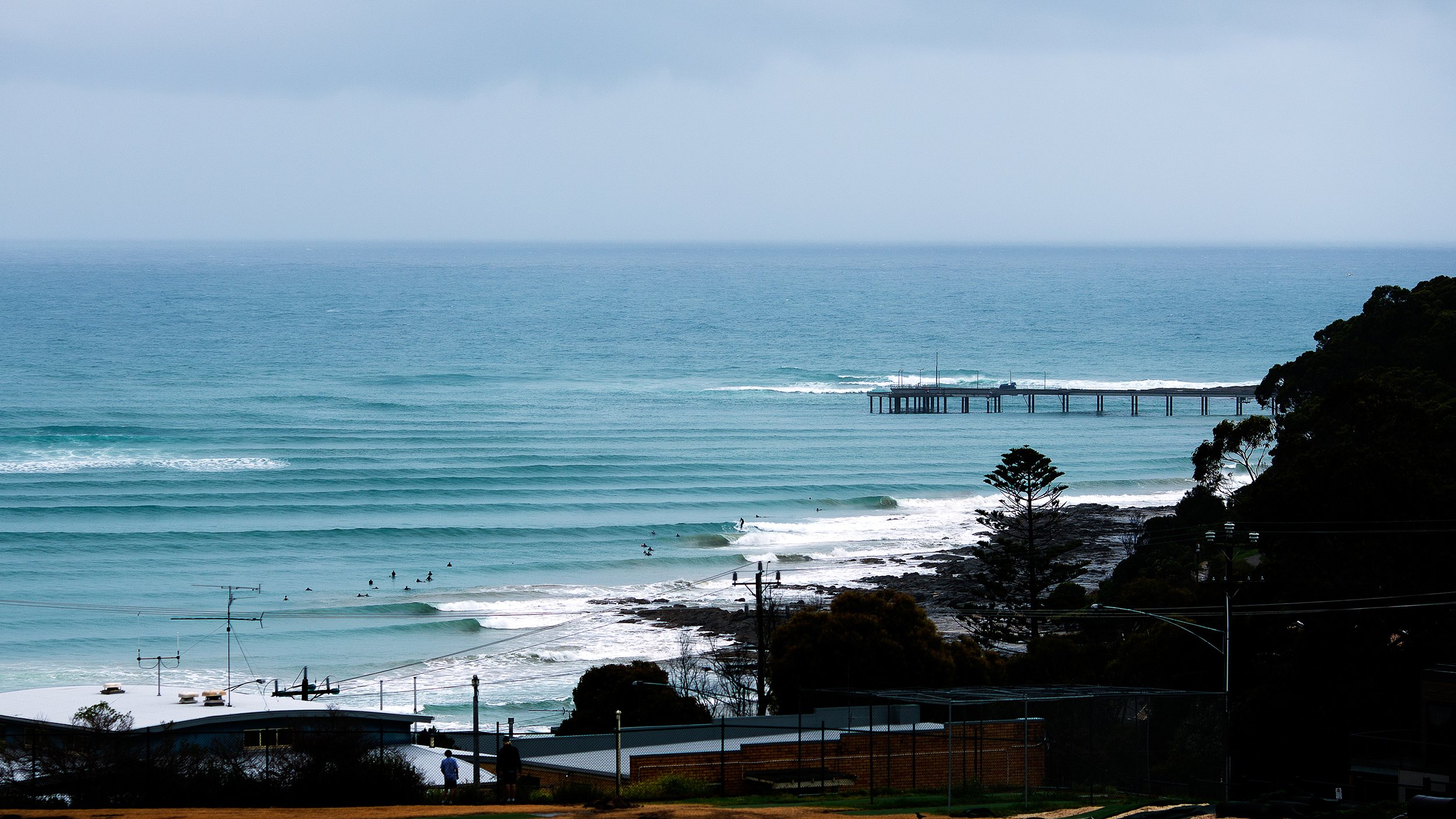
Twenty minutes’ drive east of Torquay, this wide-open reef-modified beachbreak zone can be among the highest quality surf in the country on its day. 13th is a go-to for many of the region’s surfers thanks to its swell-magnet status — when Bells is waist-high, here can be twice that. Offshore reefs help fracture approaching swells so they arrive in the surf zone as peaks, rather than just the long walls of Southern Ocean legend. The swells still pack Southern Ocean power, though, and low tide can be a real board-breaker. Best in small to medium SW swells and light to moderate NE-NNW winds. Have a photo for this break? Send it over!
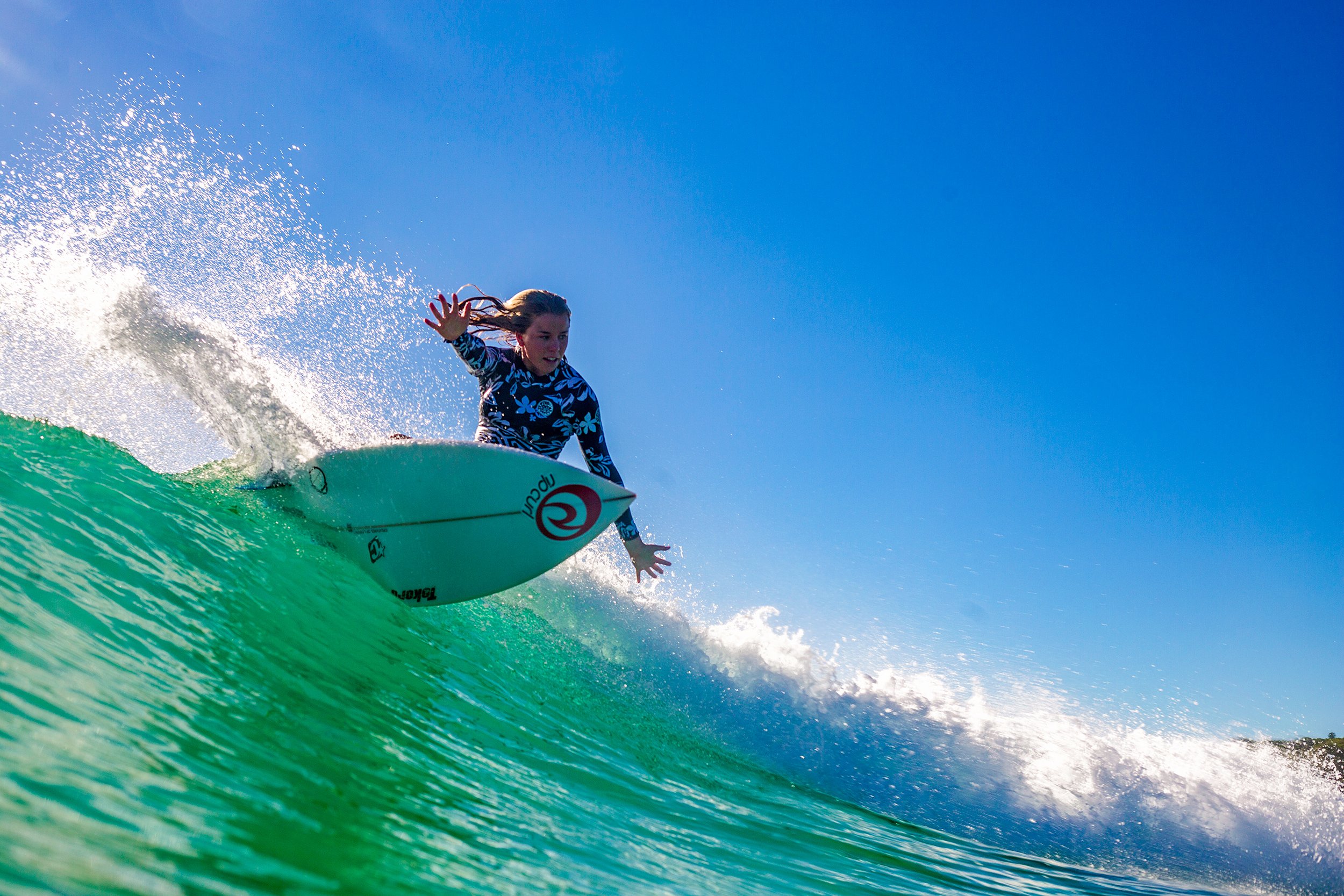
Winter is the best time to come to Victoria and get pumping waves. It’s cold, but our winter swells are amazing.

When to Score & Seasonal Surf Data
Know exactly when to score — powered by our expert historical forecast data.
Decades of spot-specific swell info — combined with forecaster insights — show your best chance to score, found only on Surfline.
Time to score

Forecaster reports
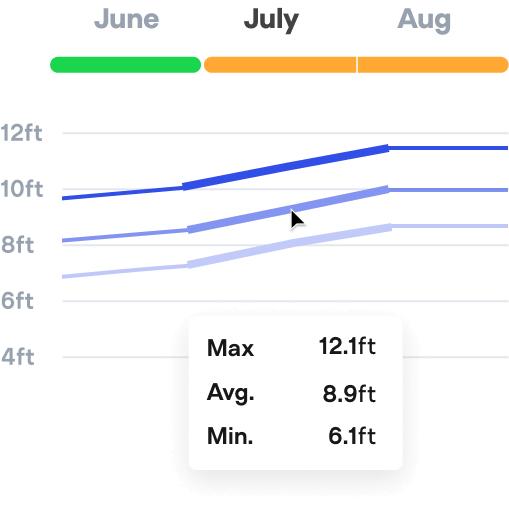
Seasonal Surf Data

Victoria According To...
Ellie
Harrison
Rising Australian surf star shares the ins and outs of life in the Bells zone.
What makes Victoria a special destination for surfers?
Victoria is an amazing destination for surfers because of the wide variety of surfbreaks you can try out. Victoria is special because of its significance in the surf world and its iconic breaks like Winkipop and Bells. These waves are some of the best I’ve ever surfed.
What kind of waves can visiting surfers expect?
Here you can find beachies, pointbreaks, barrels, and huge waves when there’s swell. You can even get perfect waves at the Urbn Surf wavepool, located in Melbourne. There are waves for longboard riders, SUP riders and bodyboarders, too.
What’s the vibe?
Victoria is pretty mellow with the amount of people in the water. There are those pumping Bells and Winki surfs where it can be a struggle to get waves, but you can always get something. There are heaps of beginner waves with everyone out there giving it a go. You can find a lot of fun waves that will not have too many people out. You just have to be willing to look around and drive.
What should surfers bring?
Most people think Victoria is cold and you need to bring your steamer, but the sun does burn through pretty easily. So, bring your steamer, 3/2mm in summer and 4/3, booties, gloves and hood in winter — just don't forget your sunscreen and zinc. When I'm surfing bigger Bells, I love to have those extra inches on my board to get into the waves easier, so I suggest bringing a couple step-ups if there's a swell coming. I also recommend purple Sex Wax.
When is the best time to score?
Winter is the best time to come to Victoria and get pumping waves. It’s cold, but our winter swells are amazing.
What else is there to do when you’re not surfing?
When you're not surfing, go check out the 12 Apostles and drive around the Great Ocean Road. You could go into Melbourne and visit museums and go shopping. During the snow season you can go to some amazing mountains like Mt. Buller, Mt. Stirling, Mt. Hotham and Falls Creek. Phillip Island is also a cool place to surf and check out the penguins or go go-carting. And there’s also a chocolate factory.
What’s your favorite local cuisine?
My favorite place to eat out would be Chevoui, located in Barwon Heads. My go-to for breakfast or lunch would be The Greengrocer, also located in Barwon Heads.
Where can people learn to surf?
If you’re a beginner coming into Victoria there's plenty of surf schools in Torquay, 13th Beach and Phillip Island…like Go Ride A Wave and Surf Sessions, which are based in Ocean Grove.
What are some things people should be aware of when it comes to local culture and customs?
I believe anywhere you go and anywhere you surf, you shouldn't only respect the locals, you should respect everyone. Always wait your turn for waves and be kind.
Any other local tips?
It’s always good to help out local brands from around the area, so support the local shops and go buy some things.
Travel Essentials

Culture & customs
The Surf Coast is rich with Australian surfing lore. Its main urban hub, Torquay, is the town where some of the greatest surf industry labels, including Rip Curl and Quiksilver, were born and raised. Its most famous surf spot, Bells Beach, plays host to the longest running major surf contest on earth. Look past that and you’ll discover a super keen surf population, highly committed to the conditions (it gets cold here!) and very proud of what they have on this long craggy coast. Strong environmental streaks run through this surf culture, as does a streak of deep memory; Torquay is the site for one of the world’s best-curated surf museums. In other ways, this is very like other Aussie surf zones, with boardriders’ clubs, volunteer surf rescue clubs, and a general awareness of surfing as being simply part of life.
Local scene
There’s a much wider range of surf along the Surf Coast than is mostly recognized beyond its shores. While Bells and its nearby cousin Winkipop are renowned for their big open wave faces and occasional serious size, there’s a lot of beachbreak surf scattered up and down the famed Great Ocean Road. The really big heavy surf lies far to the west, outside this surf zone, which is protected from the worst of the region’s harsh winter winds by Cape Otway, 80 kilometres (50 miles) to Bells’s southwest. Head the other way, into Torquay and a little further east, and you’ll find many much friendlier surf spots, where on even big winter days you’ll find a bunch of surfers having fun in much easier waves. You’ll also find the kind of casual relaxed vibe that’s a hallmark of most Australian surf zones — albeit a bit chillier!
What to bring
This is wetsuit country. A 3/2mm full suit never quite goes astray here, even in summer, and in the deep winter you’ll be glad of a 4/3mm and perhaps boots and a hoodie. Surfboard-wise, as in most Australian surf zones, any board you want to ride will find itself a home, but if you have an eye on the stronger waves such as Bells and Winkipop, bring something with plenty of paddling power and a strong glass job. There’s nothing you can’t buy here, much as anywhere in Australia, so if the weather catches you off guard, just hit one of the mega surf shops — and you might be glad of that option. Not for nothing do they say that if you don’t like the weather down here, wait ten minutes.
Also: Our amazing partners over at FCS have curated a collection of fine products for your next surf trip. Check it here.
How to get there
Fly into Melbourne, which is serviced by most international cities, and then head down the M1 to Torquay, where the marvelously named Great Ocean Road begins.
Downtime
There’s the aforementioned Surfworld Museum, worth a visit for any surf nut. Otherwise, this coast is all about driving. Head out beyond the Surf Coast to the west past Cape Otway, and check out the spectacular beauty of Johanna and the Twelve Apostles near Port Campbell. That’s a day or two done for any coast-lover. Or maybe go the other way, up to Melbourne, second only to Sydney in sheer size, and (many would say) with the edge in restaurants and general culture. (Melbourne also has the Urbnsrf Wavegarden pool, super fun on a flat day.) Further away to the east, there’s another great piece of surfing coast in Phillip Island and the Mornington Peninsula, with its super quality wineries and other delights.
Quick Tips
Travel Time
LAX: 16.5 hrs
JFK: 21 hrs
Heathrow: 21.5 hrs
Sydney: 1.5 hrs
Connectivity
WiFi connection should be no problem, especially at coffee shops, hotels, and businesses in populated places. General connectivity on your cellphone should be expected, too, unless you really go off the grid.
Currency
Australian Dollar. At the time of writing, $1 USD = 1.41 AUD
Avg. cost of...
Cup of coffee: $3.00 USD / $4.25 AUD
Lunch: $13.00 / $18.25 AUD
Beer: $7.00 / $10 AUD
Hotel room: $150.00 / $210 AUD
Visa Requirements
Yes. A visa is required to visit Australia for 90 days or less. A fee may be applicable depending on what type of travel you intend to do (business or holiday) and how long you plan to stay.
Drinking water quality
Some of the cleanest in the world.
Hazards
The frigid temperatures, not respecting the locals, paddling out in conditions beyond your ability, forgetting to pack a board with a little extra girth.
Cash, card, crypto
Credit cards are widely accepted, and access to ATMs is available…until you drive off-the-grid.
Explore nearby zones


Have feedback on this zone? Let us know [email protected]
Questions about booking with Surfline Travel? Check out our FAQs