Sydney
If you went looking for the world’s best surf city, you’d run into Sydney and stop — or at least, hang out for a while. For one thing, Sydney is a real city, with a population of over five million people, and flight-hub access to everywhere in the Pacific and South-East Asia. For another, Sydney has surf, ranging from super consistent beach-breaks to challenging reefs and slabs, scattered along its 60 kilometres (40 miles) of coastline. The surf experience is sewn into the city’s fabric, yet it’s open to all: you’ll find every kind of surfer in these waters, and you’ll find spots where there’ll be almost no surfers at all.
The Waves

Bondi Beach
Bondi is the Sydney Eastern Suburbs’ most famous beach. The three-quarter-mile (1km) stretch of southeast-facing sand is very crowded in and out of the water, with people of varying ability on a mix of surf-craft. The northern end is a safe haven for children and beginners; at the southern end, the surf is usually bigger and more suited to advanced surfers. Thanks to its southern aspect, which exposes it to the majority of swells on this coast, Bondi often struggles to hold good sandbanks. On rare occasions the beach produces good to excellent sand that can handle a solid swell. It comes into its own during the smaller summer months, with a range of banks and warm water making small fun surf for everyone to enjoy. Its exposure often means it'll have waves when the rest of Sydney is flat - and its protection from summer's north-east seabreezes means that while the rest of the city's beaches are being torn to pieces by onshore winds, Bondi is clean and glassy. LOCAL RESOURCES: Bondi Boardriders | Bondi Surf Bathers Lifesaving Club

Cronulla
Cronulla, derived from an Indigenous word — kurranulla, meaning “place of pink seashells” — is located a half-hour’s drive south of the city. This large sandy southeast-facing bay and dune system stretches for around three miles (4kms) end-to-end, giving surfers quiet waves to suit a range of skill levels. At the south end of the bay you’ll find a variety of point and reef break setups for those looking for a more predictable advanced wave.


Narrabeen
A fine example of a Sydney area classic: the lagoon/estuary opening into a long sand beach. “Northy” is renowned for its long reeling lefts off a sandbar partly constructed by the lagoon’s run-off, but the sand shifts around a lot more than might be guessed, and it’s a spot that rewards long term knowledge and patience. Best in an ENE swell with light W/SW winds, which open up the left’s end section, but can be really good in more south-angled swells too, depending on the state of the sand. Big surf on rare occasions off a bombie reef 400m out to sea. Further down the beach, down toward South Narrabeen, a range of variable-quality sandbars tend to form and dissipate over time.

Palm Beach
Long, coarse-grained sand beach running around three km (two miles) between a solid rock headland to the south and a remarkable tombola-style headland to the north. This headland, called Barrenjoey, which means “young kangaroo” in the Indigenous Garigal language, is the last piece of the northern Sydney coastal puzzle. Palmy has a variety of wave micro-climates: tucked away in the southern end is “Kiddies” Corner”, an ideal learner’s playground and longboarding haven, while up north under Barrenjoey’s lee is a series of occasional beautiful sandbars, well protected from summer NE seabreezes. In between lies a pile of variable-quality sandbars. Best in an ENE swell and light W-SW winds, but can cope with many conditions.

The crowd is quite mellow compared to other parts of Australia, especially considering how close it is to a big city. There’s the largest city in Australia, but you can be surprised and find quite empty waves.

When to Score & Seasonal Surf Data
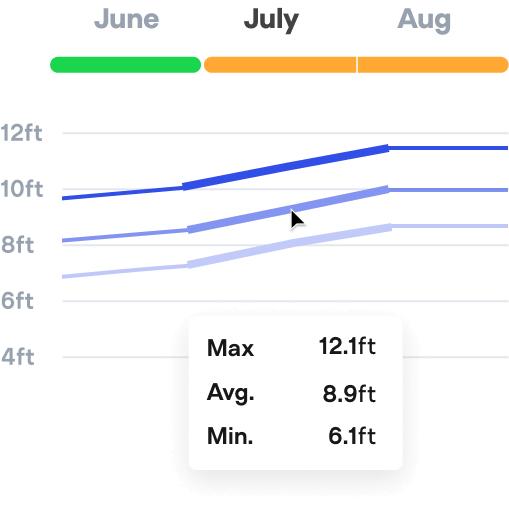
Know exactly when to score — powered by our expert historical forecast data.
Decades of spot-specific swell info — combined with forecaster insights — show your best chance to score, found only on Surfline.
Time to score

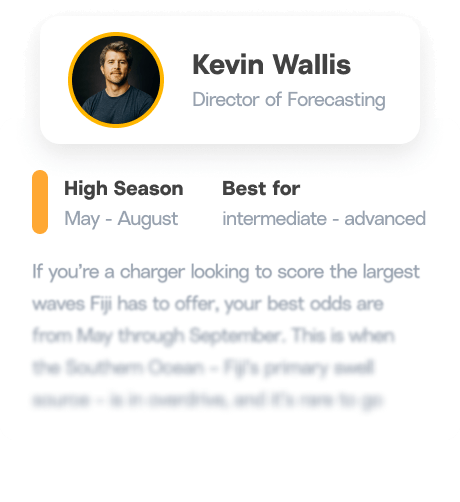
Forecaster reports
Seasonal Surf Data

Sydney According To...
Tom
Carroll
World Champ and Australian surfing icon talks Sydney’s surfing scene.
What makes Sydney’s Northern Beaches a special destination for surfers?
For the pure act of surfing, it’s got a lot of fun beachbreaks. I think this whole area is really surf drenched, as far as the culture goes. Plus, on top of that, you can step out of the surf culture. There’s a big city close by, so it’s got arts, culture, amenities, restaurants, events. A lot of artists come to the city to do their thing, so it’s got that. And not so far away from here is quite fun surf, both north and south of. So, there are a lot of swell and wind directions that factor in.
What kind of waves can visiting surfers expect?
You’re going to have to understand currents, rips and how beachbreaks operate. You can travel north or south of here pretty easily and get pointbreaks, but the Northern Beaches are mostly beachbreaks. And there are some reefbreaks that can handle sizable stuff. There are a lot of options for us around here.
What’s the vibe?
The crowd is quite mellow compared to other parts of Australia, especially considering how close it is to a big city. There’s the largest city in Australia, but you can be surprised and find quite empty waves. And you’ve got this historic element with all these great surfers from Nat Young to Midget Farrelly to Simon Anderson, who developed the surfboard fin configuration you’re probably riding at the moment, to multiple world champions who were born and bred in this area. There’s quite a lot of talent to come out of these beaches. Down the southern end of the Northern Beaches it gets quite busy, down Manly way, but the northern end of the Northern Beaches are a little mellower. There are some places that are quite competitive like North Narrabeen, but you have to understand beachbreaks and how they work. It’s not like the Gold Coast and the points where the crowd lines up; things spread out a bit more here, because of the nature of the surf.
What should surfers bring?
We’ll use anything from boardshorts or a wetsuit top when it’s warm. Maybe a springsuit. But when the water dips down, say below 20 degrees Centigrade, that’s when the wind chill will start to pick up. Through the winter months we’ll use 3/2s or even 4/3s. We don’t get cold water here, but the wind chill factor is real. The southwest winds in August create beautiful conditions, but the wind comes straight off the snow fields. They’re about six hours southwest from here and we’ll feel the chill.
When is the best time to score?
The best time of year is March through June and into July. That said, you can get really lucky through other times of the year, but mostly we’re set up for that autumn time coming into winter. Like I said, usually we have pretty warm water here, so that’s nice. In the summer months we will get these winds called a Black Northeaster, and they cause the temperature in the water to drop colder than it does in the winter.
What else is there to do when you’re not surfing?
There are a lot of training facilities around here for people that train for sport. You can take part in various things like rock climbing, mountain bike riding, bush walking, taking tours of native wildlife and history. We’re really close to a couple beautiful national parks. It would surprise you that you’re close to a big, old city. And then you can go into Sydney and do that whole thing.
What’s your favorite local cuisine?
We have a lot of good food here. We have strong local vegan and vegetarian scene, which is quite good. There’s really good Brazilian food, too. We have some pretty high-end restaurants in the area. From Manly to Palm Beach there are so many options. There’s beautiful Japanese food, there’s Italian, there’s some great Thai. And then you got the local pubs. And some create coffee spots, too, for that morning hit.
What are some things people should be aware of when it comes to local culture and customs?
I think common sense prevails. People are pretty friendly around here in the ocean. Like I said, some places are a little more feisty than others, but I think generally it’s an easygoing area. As long as you’re out there respecting others and giving people space to enjoy the ocean, that’s all you have to do. People around here really use these beaches to exercise and release stress from their city life, so I think it’s important to note that when you come over here to surf – respect the local area and give people space. Give space and you’ll be given space.
Travel Essentials

Culture & customs
This is the place where surfing began in Australia, over 120 years ago. Since then, the surf culture has evolved in tandem with a rapidly growing city, into something much broader than the old “aggro-Aussie” stereotype of surfing’s past. There’s world champs and there’s people who just like to go for a swim in the mornings, and everybody in between. At a typical Sydney beach you’ll find a boardriders’ club, a volunteer surf rescue club, a lot of good cafes with surf pictures on the wall, and a natural-world feel that’s rare in a big city. Here, being in the water feels less like an escape and more just like normal life.
Local scene
Sydney is split into around 40 separate beaches, each with its own vibe and cultural setting. They’re all a little different, and they all change day to day with the region’s rapid shifts in wind angle and swell size/direction. What they have in common is a wide range of surfers, from frothing mini-grommets to families, shortboard rippers and mid-length cruisers. Everywhere has its local crew of people who surf there on the daily, yet only one or two spots can really be called “localized” — Sydney surfers generally just enjoy being in the water, which gives rise to a relaxed surfing environment.
What to bring
Any kind of board you’re feeling. Sydney and its nearby coasts can see incredible days of big, scary surf, but those days are rare. Most days you can ride anything from a 10’+ glider to a 5’7” Fish and have just as much fun on either. You’ll want to bring a 3/2mm full suit through the winter and early spring months; while the water rarely drops below 64-66 degrees F, the wind chill can get you. Otherwise, spring-suits or less will get you through. Sun protection is a serious issue here though, thanks to a thinned-out ozone layer. Bring hats. Good hats.
Also: Our amazing partners over at FCS have curated a collection of fine products for your next surf trip. Check it here.
How to get there
Fly into Sydney International Airport from every major hub in Europe and the Americas and, boom, you’re there. It’s not a short flight, but worth every ounce of the considerable jetlag.
Downtime
Sydney’s a hub for everywhere else in Australia, including the beautiful coastlines to its north and south, and places like the Gold Coast and the Surf Coast, both of which are just an hour’s flight away. Meantime, there’s an entire city to explore: restaurants, art galleries, clubs, pubs, cool little neighborhoods, hectic nightlife, and most of all, Sydney’s astounding natural setting. The Sydney Harbor trail walk takes you out of sight of all buildings, and you can feel what it might have been like a thousand years ago for the Gadigal people, the area’s Indigenous custodians. There’s epic boating, fishing and diving, both offshore and along hundreds of miles of coastal estuary. You may even become so tired from all this activity that you forget to go surfing.
Quick Tips
Travel Time
LAX: 15.5 hrs
JFK: 20.5 hrs
Heathrow: 21.5 hrs
Connectivity
This is a major city. Abundant WiFi and reliable cell reception are a given.
Currency
Australian Dollar. At the time of writing, $1 USD = 1.41 AUD
Avg. cost of...
Cup of coffee: $3.00
Lunch: $15.00
Beer: $6.00
Hotel room: $200.00
Visa Requirements
Yes. A visa is required to visit Australia for 90 days or less. A fee may be applicable depending on what type of travel you intend to do (business or holiday) and how long you plan to stay.
Drinking water quality
Some of the cleanest in the world.
Hazards
Sydney is a relatively safe city. But, like most major metropolises, there is potential for petty theft, getting ripped off, etc. Additional hazards include sunburns, crowds, localism (at some spots), and other popular surf zone risks.
Cash, card, crypto
Credit cards are widely accepted, and access to ATMs is readily available.
Explore Other Zones


Have feedback on this zone? Let us know [email protected]
Questions about booking with Surfline Travel? Check out our FAQs