South Maui
Similar to Oahu’s South Shore, this side of Maui is an idyllic location for couples, families, and hardcore surf travelers alike. During the summer, south swells pour into the island and light up the many nooks and crannies that dot this stretch of coast. Though shadowing from neighboring islands can be an issue, marquee breaks do turn world-class when a good amount of South Pacific energy sneaks through. Even when the waves are small, Maui is still paradise.
The Waves
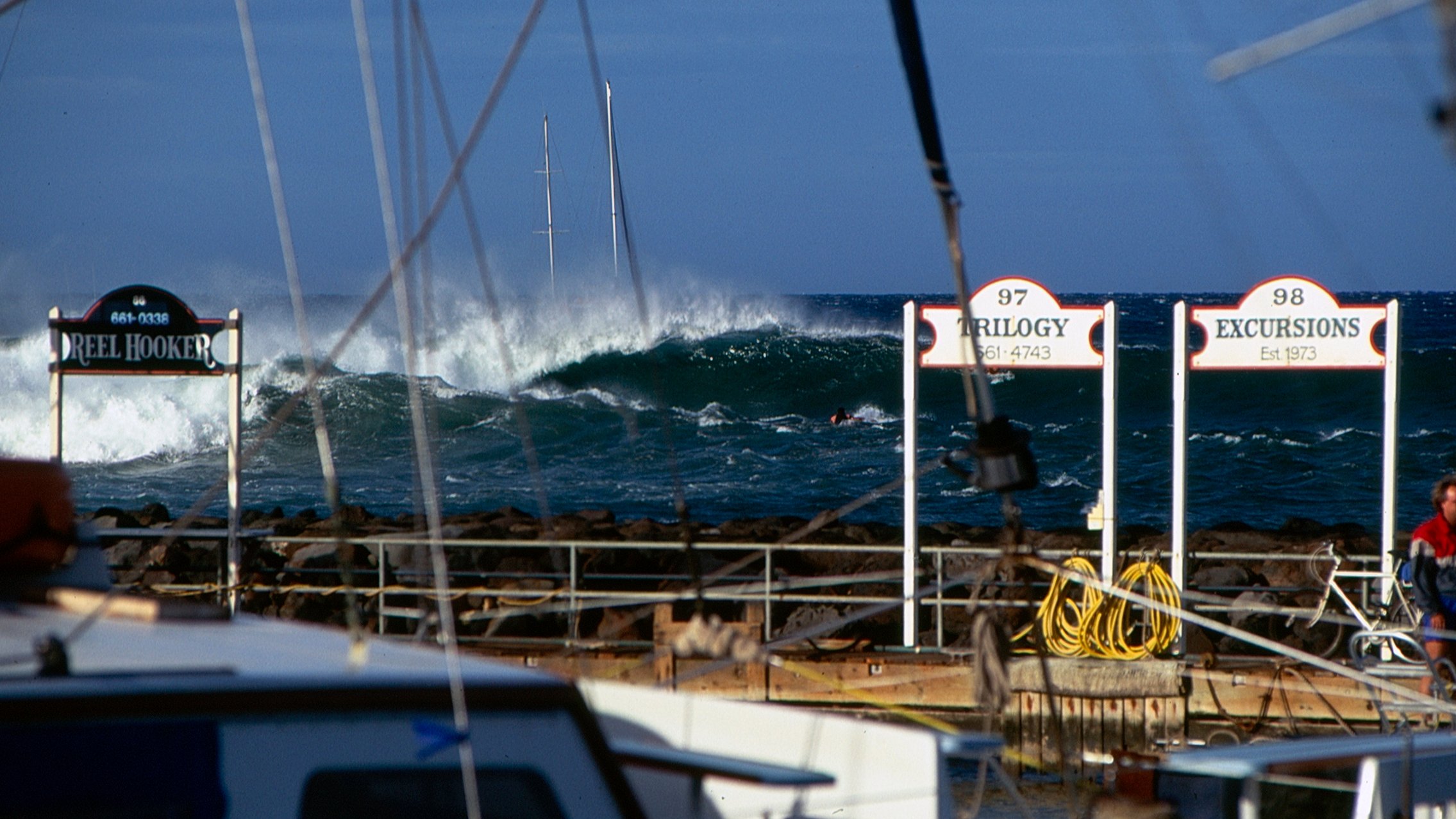
Lahaina Harbor-Breakwall
On solid summer south swells, the northern end of the breakwater offers up long, grinding lefts that stand up and barrel. In the winter, north swells shoot the gap between Maui and Moloka'i and hit the southern end of the breakwater, forming a right-hander that is a mirror image of the left. As you can imagine, Lahaina Harbor is no secret -- it attracts a crowd, and often a talented one -- especially on small days. (Bigger swells should be left for more experienced surfers, as both the left and right are fast and break across shallow stretches of reef.)


Ma’alaea Harbor
While not the swell magnet that fellow west coast harbor break Lahaina is, Ma'alaea is one of Maui's most famous waves. This is in part for the rifling, perfect right-hand tubes it creates on just the right South or SW swell; in another part for the decades-long fight to preserve Ma'alaea's existence as a world-class, albeit rare, surf spot. (Fortunately, in May of 2012, federal and state agencies ended the project that would have expanded a portion of the Ma'alaea Harbor and effectively destroyed the wave, thus ensuring Ma'alaea will remain a jewel in Hawaii's pantheon of incredible surf breaks.) Once considered the "fastest wave on earth," Ma'alaea has attracted brave barrel riders from within Maui and abroad for decades, thus the crowd can become as intense as the wave itself. Because of its size, the crowd, and the reef bottom, Ma'alaea is considered an expert-only spot, though there are more manageable peaks nearby during smaller South swells.

La Perouse Bay
La Perouse Bay is a very rocky bay on the desolate and beautiful southern corner of Maui. You can score powerful, clean and fairly uncrowded lefts. While La Perouse can hold anything from head-high to triple-overhead and above, it can also be shouldery and slopey. When it's big, though, these sections allow you to work on your carving game all the way to the shore. La Perouse is usually cleanest early in the mornings, as the offshore ENE tradewinds pick up later in the day and can make it a little difficult for surfing.

Do your research before coming to Maui. Come with an open heart. Make sure you show gratitude, to the land and the people. If you do all that, you can’t go wrong.

When to Score & Seasonal Surf Data
Know exactly when to score — powered by our expert historical forecast data.
Decades of spot-specific swell info — combined with forecaster insights — show your best chance to score, found only on Surfline.
Time to score

Forecaster reports
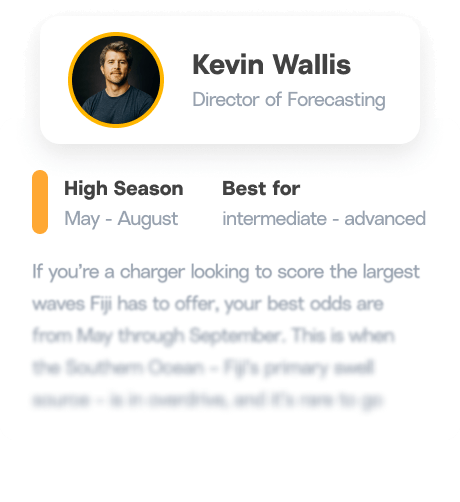
Seasonal Surf Data

South Maui According To...
Paige
Alms
Big-wave champion and Jaws specialist guides us through the Valley Isle.
What makes Maui a special destination for surfers?
The variety of things to do on Maui – that’s what makes it special. There’s not just traditional surfing. Our island is pretty windy, so if you want to learn a wind sport, that’s the place to do it. You can drive around the island in, like, eight hours depending on how fast you go. You get to see a lot of different climates on a tiny little island, and it’s pretty cool to go from rainforest into dry desert. And there’s endless activities. It’s hard to get bored on Maui.
What kind of waves can visiting surfers expect?
It depends on the time of the year. Summertime is pretty fickle. That’s the time to longboard. Our south swells are usually blocked by other islands, so we don’t get the biggest swells. But if there is a good south swell, there’s good waves for longboarders, shortboarders, everyone. Then, in the wintertime, things change. We don’t have as many waves as the other islands do, we’re more limited due to the wind. When the tradewinds are blowing and it’s smaller, Ho’okipa is kinda the only option. But when there’s a big north swell, it just wraps around the entire west side and we have so many waves. A lot of waves turn on that don’t usually break. The only concern is consistency. But you can surf Ho’okipa, like, 350 days a year.
From a surfing perspective, what differentiates North Maui from South Maui?
Surf-wise, the north shore has way more power and consistency. Whereas the south-facing shores are more user-friendly and don’t get as big.
What’s the vibe?
It all depends on the spot, swell and conditions. You get a mixed bag of everything on Maui, and there’s a lot of factors that come into play. Like anywhere, you’re going to have your locals who command respect and dominate the lineup — it’s pretty hard to get a wave at certain spots, like Honolua Bay when it’s firing. Otherwise, it’s pretty mellow for the most part. Maui has a mix of people that’ve moved to the island over the last 20 years. I don’t feel like the vibe is super heavy, but I grew up there so it might be different for me [laughs].
What should surfers bring?
Anything and everything, from a foilboard for waves that don’t break to a 10’6” Jaws gun, depending on your surfing experience and what you’re looking for. It also depends on the season: a shortboard for wintertime; a longboard and a fish for summertime. And bring your sunscreen, but make sure that it’s non-toxic and reef-safe. For any other travel essentials you might need, you can pretty much get anything on Maui.
When is the best time to score?
Wintertime is the most consistent, so October through March for the experienced surfers who are looking to get the best waves. Everyone else, like those trying to learn, can come anytime.
What else is there to do when you’re not surfing?
Maui is windy, so it’s pretty fun to play around with different wind sports. I’ve been super into wind foiling lately – that’s all I do in the summertime. We also have endless beaches and beautiful waterfalls. Go hiking, go exploring, go out and meet cool people. Maui is all about enjoying nature. I mean, you could stay in Lahaina and go shopping – if that’s your thing – but I don’t recommend it because you can go shopping anywhere.
What’s your favorite local cuisine?
Lots of fish, some of the freshest in the world. If you’re in Maui, you should eat some fresh fish. Paia Fish Market and Nuka Sushi on the north shore – those are my two favorites. Then there’s Choice Health Bar in Lahaina and Paia — that’s my go-to healthy food spot.
Where can people learn to surf?
There’s so many surf schools on Maui. Pretty much anywhere you go, you can learn to surf. But if you really want someone legit, go get lessons from my friend Tyler [Larronde]. He’s definitely a good person to learn from.
Any other local tips?
Do your research before coming to Maui. Come with an open heart. Make sure you show gratitude, to the land and the people. If you do all that, you can’t go wrong.
Travel Essentials

Culture & customs
Just like surfing is a Hawaiian sport, Aloha is a Hawaiian custom. Honor the traditions, be humble and patient. A smile and a shaka go a long way. When paddling out, sit, watch and wait your turn. If you want a shot at a decent wave at any of the top spots, you’ll need to pay your dues and earn your place in the lineup. Thousands of surfers visit the islands every year, but this is a sacred place. Follow the rules, know your limits, respect the people and the environment… And take your sandals off before entering anyone’s home.
Local scene
Although Maui is much mellower than Oahu, don’t expect that island-style cruisiness to translate to the waves. Even at popular spots, like Lahaina Harbor on the southwest corner (or the “head”), one of the island’s few spots that defies the norm and breaks year-round, there’s a significant pecking order. And on bigger swells, it’s way more dangerous than it looks; both the left and the right, depending on the season, break over shallow reef. There’s plenty of other legit, less-publicized spots, but respect is mandatory everywhere — respect for the surfers and respect for the waves.
What to bring
All your tropical surf trip necessities and maybe even your own snacks (everything’s more expensive in Hawaii). One thing you don’t wanna bring: your ego. Lock it up and leave it at home. There’s something for everyone here — from beginner waves to high-performance spots to big waves to wind sports — so bring your board of choice. Or don’t. Local shops will sell you anything you need.
Also: Our amazing partners over at FCS have curated a collection of fine products for your next surf trip. Check it here.
How to get there
Kahului Airport is the main airport in Maui, offering flights to and from the mainland, other islands and beyond. Your best bet from there is getting a four-wheel-drive rental car to explore the island. You’ll likely find yourself on some dirt roads.
Downtime
From national parks to helicopter tours to golf courses to snorkeling to fishing excursions – the options on Maui are vast. Most non-surfing options on Maui involve hiking, like Pipiwai Trail (which has three waterfalls), Iao Valley State Park and Kapalua Coastal Trail. Haleakala National Park is home to one of the world’s largest dormant volcano craters, standing more than 10,000 feet above sea level at its summit. For less adventurous activities, there are good shopping, dining and nightlife options in more urban areas like Lahaina.
Quick Tips
Travel Time
LAX: 5 hrs
JFK: 10.5 hrs
Heathrow: 17 hrs
SYD: 15-20 hrs +
Connectivity
WiFi and cell service basically everywhere, except in the rural areas (which there’s a lot of.)
Currency
USD, Aloha
Avg. cost of...
Cup of coffee: $2.00
Lunch: $12.00
Beer: $5.00
Hotel room: Depends. Everything from cheap hostels or Airbnb’s, to swanky hotels running a couple Gs a night.
Visa Requirements
No travel visa necessary for US visitors. Australian travellers can visit Hawaii for up to 90 days without obtaining a visa under the Visa Waiver Program.
Drinking water quality
Safe to drink.
Hazards
Paddling straight to the peak, overestimating your limits, ignoring local lifeguards, breaking your leash and losing your board on the rocks, being blown away by the winds.
Cash, card, crypto
Pretty much everywhere will accept debit or credit cards, but it’s always good to carry some cash. ATMs are available for withdrawals in most urban centers.
Explore Other Zones


Have feedback on this zone? Let us know [email protected]
Questions about booking with Surfline Travel? Check out our FAQs